Indoor Cat Boredom Fixes: Daily Hunt, Toys & Puzzles
How to keep an indoor cat from getting bored?
Create a “daily hunt” routine
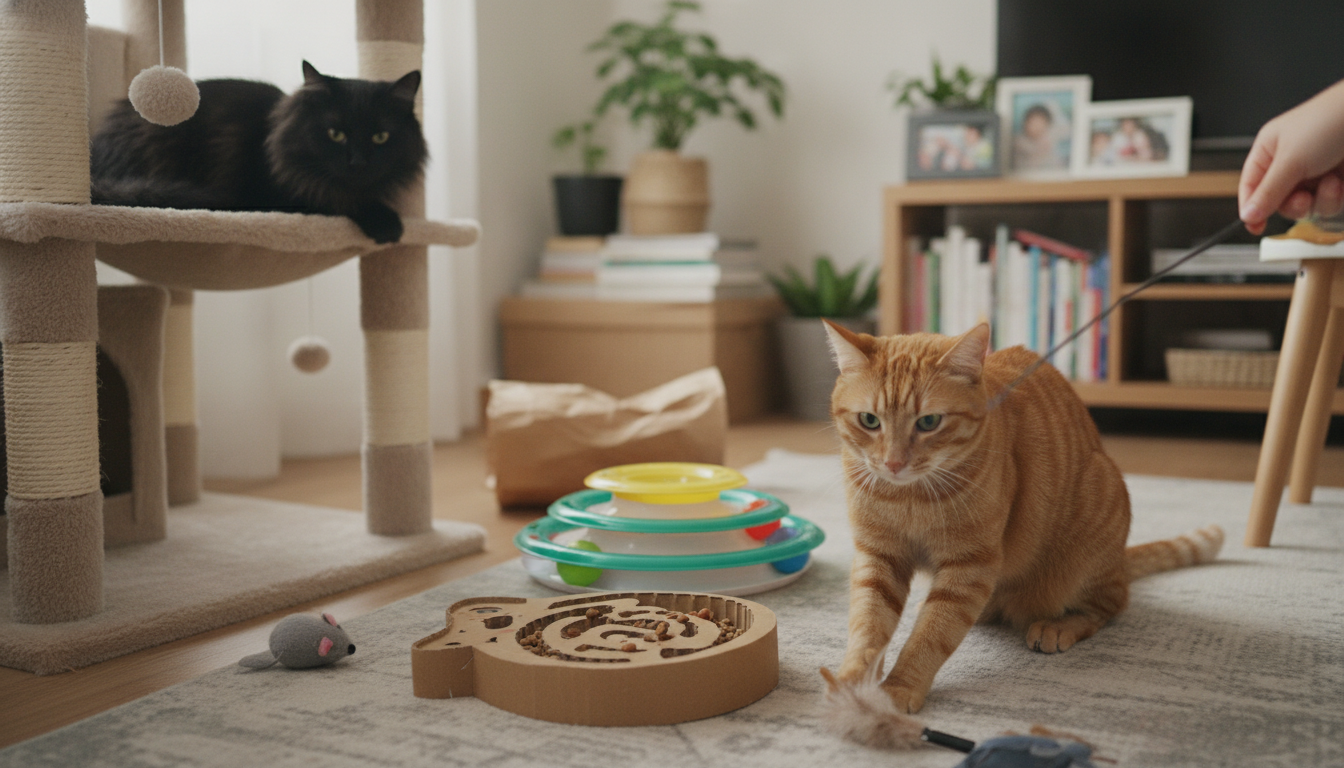
Boredom often looks like nighttime zoomies, excessive meowing, or swatting at ankles—signs your cat needs a job. Build a predictable play schedule that mimics hunting: 5–10 minutes of stalk-and-chase with a wand toy, then a small meal or treat to “finish” the cycle. Two short sessions a day usually beat one long session, especially for cats with quick bursts of energy.
Rotate toys instead of buying more
Most cats get bored because the same toys are always available. Keep only a few out at a time and swap them every few days. Mix textures and movement styles (crinkle, kickers, rolling balls, feather teasers) so the environment feels “new” without constant shopping.
Add vertical space and window entertainment
Cats stay mentally busy when they can climb, perch, and observe. A sturdy cat tree, a window perch, or wall-mounted shelves can turn a flat room into a mini territory. Place a cozy lookout near a window and consider adding a bird feeder outside to create safe, engaging “cat TV.”
Use food as enrichment
Turn meals into a puzzle: scatter kibble in a snuffle mat, hide treats in a few spots around the home, or use a treat ball your cat has to roll. This adds problem-solving and movement while slowing down fast eaters.
Make solo time more rewarding
If your cat is alone during work hours, set up independent activities: a cardboard box “maze,” paper bags (handles removed), scratching posts in favorite areas, and a rotation of safe, solo toys. For more step-by-step ideas—including DIY toys, play routines, and home upgrades—see the full guide here: indoor cat enrichment guide.
For Indoor Cat Boredom Fixes: Daily Hunt, Toys & Puzzles, the best answer depends on fit, material, care instructions, and how the product will be used day to day.
FAQ
Is it better to have two cats so my indoor cat won’t be bored?
Sometimes, but not always. A compatible second cat can add play and companionship, but mismatched personalities can increase stress—so introductions and temperament matter more than the number of cats.













Leave a comment