No Cat Food? Safe Emergency Meals for Kittens
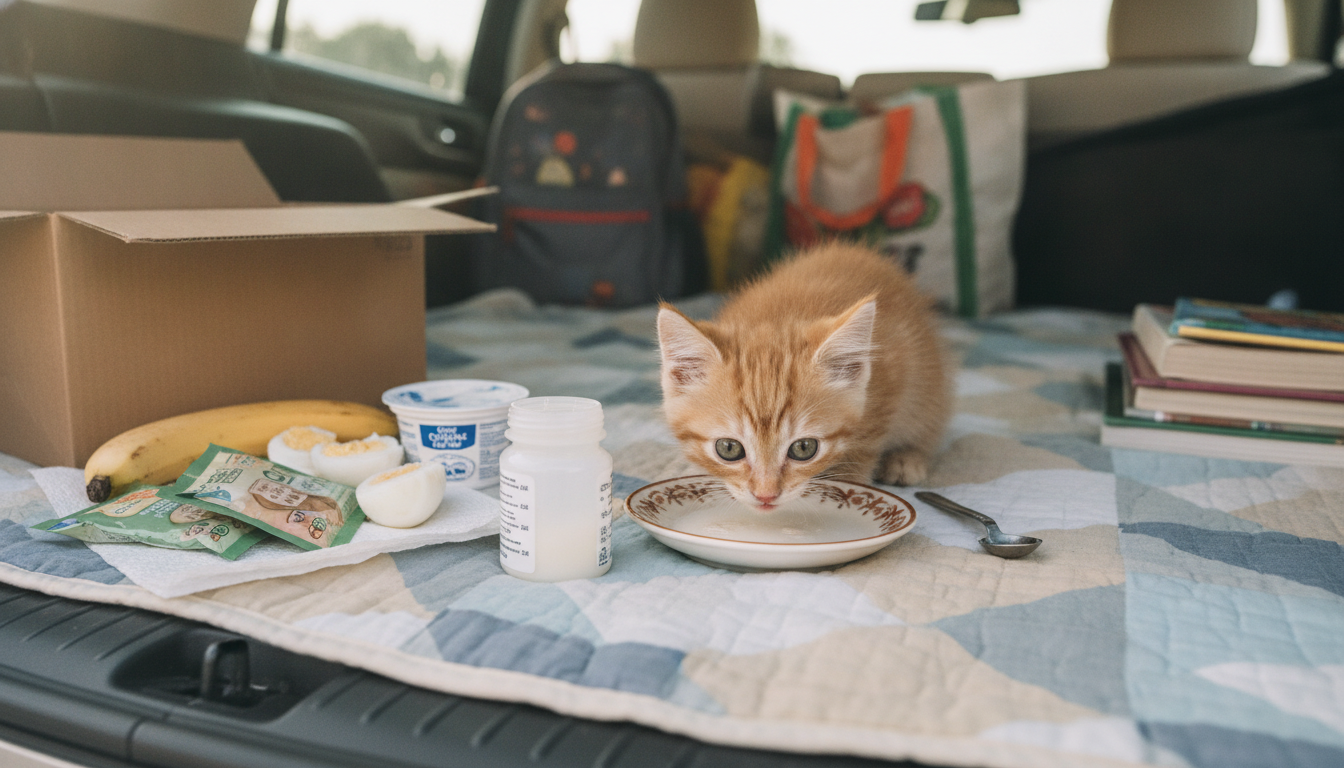
What do I feed a kitten if I don’t have cat food?
Safe short-term options (one meal, not a long-term plan)
If you’re out of kitten food, the goal is to keep a kitten hydrated and get gentle, easy-to-digest calories until you can buy the right food. The safest stopgap depends on the kitten’s age. Very young kittens can’t handle solid food yet, while older kittens can manage soft, high-protein foods for a short time.
If the kitten is under 4 weeks old
Use a commercial kitten milk replacer (KMR) if at all possible. If you don’t have KMR, contact a nearby vet clinic, emergency vet, shelter, or rescue—many have supplies or can direct you quickly. Avoid cow’s milk; it often causes diarrhea and dehydration in kittens. Do not offer plain water as a “replacement” for milk to very young kittens.
If the kitten is about 4–8 weeks old (weaning age)
Offer a soft slurry: warm water mixed with a small amount of a bland protein like plain cooked chicken (no skin, bones, salt, garlic, or onion). If you have eggs, a small portion of scrambled egg cooked without butter/oil/seasonings can work for a single meal. Feed small amounts and watch for stomach upset.
If the kitten is over 8 weeks old
A small meal of plain cooked chicken or turkey, or unseasoned scrambled egg, is usually the gentlest emergency option. Keep portions modest and provide fresh water. Avoid processed meats (deli slices, sausage, bacon) because they’re salty and can upset digestion.
What to avoid
Do not feed onions, garlic, chives, grapes/raisins, chocolate, alcohol, xylitol, cooked bones, or heavily seasoned foods. Skip tuna as a “solution” beyond an occasional tiny taste—too much can lead to nutrition imbalance.
Get back on a proper kitten diet quickly
Kittens need calorie-dense, complete nutrition for growth, so switch back to a complete kitten food as soon as you can. For a simple age-based feeding schedule and starter food guidance, follow this resource: new kitten feeding guide and starter food schedule.
FAQ
How often should I feed a kitten at different ages?
Young kittens need frequent meals: very small kittens may need feeding every few hours, while weaning-age kittens typically eat several small meals per day. As they get older, you can gradually reduce meal frequency while increasing portion size.














Leave a comment