Modern Home Lighting Plan: Layers, Kelvin, Smart Scenes
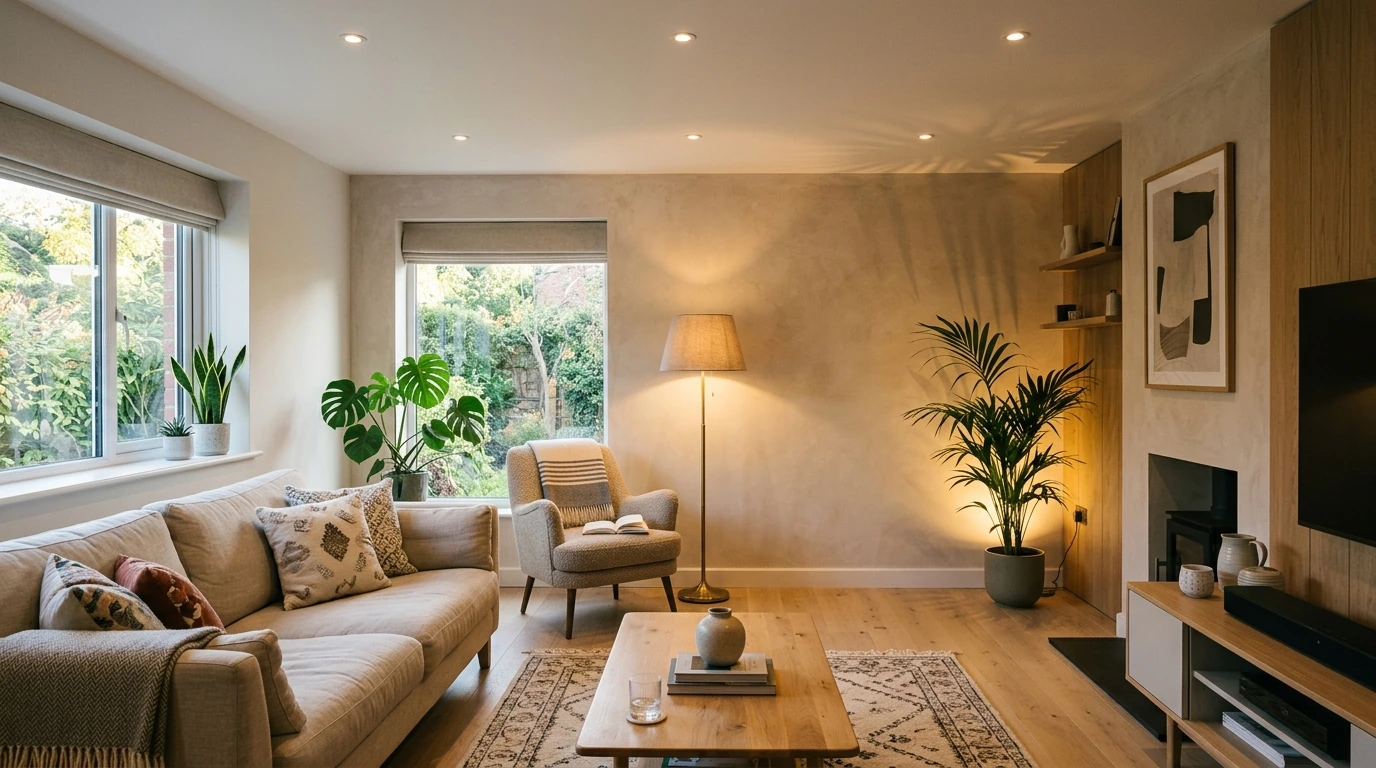
Light Up Your Home: A Practical Lighting Plan for Smart, Cozy, Modern Rooms
Great lighting is the fastest way to make your home feel intentional—calmer in the evening, brighter when it’s time to focus, and more flattering for everything from cooking to relaxing. Our team uses a simple, repeatable approach: build lighting in layers (ambient, task, accent), keep color temperature consistent within each “zone,” and use dimming or smart scenes so your rooms flex throughout the day. The goal is fewer harsh overhead moments, fewer “why is this corner so dark?” problems, and a setup that looks cohesive even when the lights are off. For more guidance, see Five Principles for Responsible Outdoor Lighting.
Start with the three lighting layers (and stop relying on one ceiling light)
If one overhead fixture is doing all the work, you’ll get glare, shadows, and that flat “waiting room” feel. A modern, cozy room usually needs at least two layers on at once; three layers creates depth without feeling clinical. For further reading, see A Guide to Lighting Control Strategies.
1) Ambient lighting (the base layer)
This is your overall brightness so the room is usable. Think ceiling fixtures, recessed lighting, or a bright floor lamp that bounces light off the walls or ceiling for softer coverage.
2) Task lighting (where your eyes and hands work)
This is targeted, purposeful light: desk lamps, under-cabinet strips, vanity lights, reading lamps, and any focused beam that helps you see details without straining.
3) Accent lighting (mood + shape)
This is the layer that makes a room feel designed. Picture lights, small uplights, shelf lighting, LED strips behind furniture, or a lamp placed to graze a wall can instantly add dimension. If a room feels cold or flat, it usually needs more accent light and less reliance on a single overhead source.
Choose color temperature by how the room is used
Color temperature is the “warm vs. cool” look of your light. Choosing it intentionally prevents the room from looking oddly yellow, bluish, or mismatched against your wall paint and finishes.
- Warm white (2700K–3000K): best for living rooms, bedrooms, dining areas, and evening wind-down spaces—cozy and flattering.
- Neutral to cool (3500K–4000K): helpful in kitchens, bathrooms, laundry rooms, and home offices where clarity matters.
- Keep it consistent within an open area: mixing temperatures inside one zone can look messy; use dimming for flexibility instead.
- Consider tunable white: it’s the easiest way to get daytime focus and nighttime calm without swapping bulbs.
Quick Temperature & Brightness Planner (room by room)
| Room | Best temperature range | Primary layers to prioritize | Simple upgrade that makes the biggest difference |
|---|---|---|---|
| Living room | 2700K–3000K | Ambient + accent | Add two lamps on opposite sides to eliminate harsh overhead shadows |
| Bedroom | 2700K | Ambient + task | Bedside lamps with warm dimming for wind-down |
| Kitchen | 3000K–4000K | Task + ambient | Under-cabinet lighting for counters (the real work surface) |
| Bathroom | 3000K–4000K | Task + ambient | Even light at the mirror (sconces or vertical bars) |
| Home office | 3500K–4000K | Task + ambient | Adjustable desk lamp + glare control (shade/angle) |
| Entry/hall | 2700K–3000K | Ambient + accent | Add a small lamp or wall-wash to avoid tunnel lighting |
Make lighting feel modern: fewer fixtures, better placement
Modern lighting isn’t about filling every inch with brightness. It’s about placement, height, and comfort.
- Use different heights: overhead for base brightness, mid-level lamps for comfort, and low accent lights for depth.
- Try wall-washing: aim a lamp toward a blank wall or curtain so the room glows without glare.
- Avoid bare bulbs at eye level: choose shades, diffusers, or indirect placement so your space stays relaxing.
- Group lighting by activity zones: in open-plan areas, light the sofa area, dining area, and cooking zone separately instead of blasting the whole footprint evenly.
- Repeat finishes and shapes: a cohesive look comes from repeating finishes (black, brass, chrome) and shapes (globe, drum, cylinder) across rooms.
Dimmers, smart bulbs, and scenes: the fastest path to cozy
A room-by-room checklist to eliminate dark corners and glare
Put the plan on paper: map fixtures, bulbs, and scenes before buying
The printable planner that turns ideas into a finished lighting setup
If you want a step-by-step way to make decisions room by room, our team built a practical digital planner you can reuse anytime you rearrange, move, or renovate: Light Up Your Home | Digital Lighting Guide for Modern Interiors. It’s designed to help you choose consistent color temperatures, place lighting layers strategically, and set up smart scenes for everyday comfort—so you can plan first and shop with clarity.
If you’re pairing a lighting refresh with better routines (morning focus, evening wind-down, and work blocks that actually stick), you can also use The Ultimate Productivity Blueprint to structure your day around the way your home really functions.
Helpful references (authoritative, practical)
FAQ
How many lights does a room actually need to feel cozy?
Plan for layers: ambient plus either task or accent at a minimum, with all three layers for the most depth. In living rooms and bedrooms, two to three light sources (like a floor lamp, a table lamp, and one accent option) usually feels cozy once you add dimming.
What color temperature is best for a modern interior without feeling cold?
Use 2700K–3000K in most living spaces to keep the look warm and modern, not amber or dated. Save 3500K–4000K for task-heavy rooms like kitchens, baths, and offices, and keep each open area consistent so it doesn’t look patchy.
Are smart bulbs worth it if the fixtures stay the same?
Yes—smart bulbs can dramatically change how a room feels by letting you tune warmth, schedule daily transitions, and create scenes like Focus or Evening Cozy. The key is avoiding incompatible dimmers and not mixing different bulb models on the same dimmer circuit.












Leave a comment