Steel Pallet Strapping Kit: Tight, Reliable Load Security

Heavy-Duty Steel Pallet Strapping Kit: Secure Pallet Loads That Stay Put
When a pallet load shifts in transit, the cost shows up fast: crushed corners, broken wrap, returns, and cleanup time. A heavy-duty steel pallet strapping kit is built for the jobs where “tight enough” has to stay tight—through handling, vibration, and long-haul movement. Our team put together the practical decision points below so you can choose the right strapping approach, strap pallet loads cleanly, and keep your banding consistent shift after shift.
When steel strapping is the right call
Steel strapping earns its place when your load is unforgiving. If you’re unitizing dense, rigid, or sharp-edged products, steel’s stiffness and bite help keep everything locked in place instead of slowly loosening as the pallet gets moved around.
- Choose steel strapping when loads are dense, rigid, or have sharp edges that can cut softer strapping.
- Use steel to reduce load “breathing” (expansion/contraction) that can loosen lighter-duty materials over time.
- Helpful for stabilizing products that must remain square on a pallet (boxed freight, bundled materials, stacked cartons with a high center of gravity).
- A steel strapping kit is a fit when repeatable tension and a consistent closure method matter more than speed alone.
- If you’re strapping lighter or fragile cartons, steel can be too aggressive; edge protectors and corner boards help when load faces are sensitive.
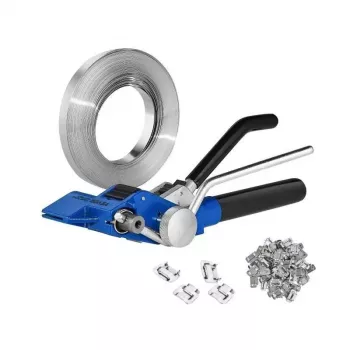
If you’re ready to standardize a tough, repeatable setup, our Heavy-Duty Steel Pallet Strapping Kit is a solid starting point for steel banding tasks where you don’t want straps relaxing mid-route.
Steel vs. plastic strapping: a practical comparison
The best choice depends on how your load behaves under clamp force and movement. Rigid loads can tolerate higher tension without settling; compressible loads may “shrink” after you tension them, which can leave any strapping looser unless you plan for it (more straps, different placement, or a re-tension step).
- Match strapping type to load behavior: rigid loads tolerate higher clamp force; compressible loads may settle and loosen straps if not planned for.
- Factor in handling conditions: frequent impacts, vibration, or long-distance transport increases the value of steel’s stiffness.
- If edge damage is a concern, plan for corner boards/edge protectors regardless of strapping type.
| Strapping type | Best for | Strength & stiffness | Edge sensitivity | Typical tradeoff |
|---|---|---|---|---|
| Steel strapping | Dense, rigid, heavy pallet loads | High strength; very stiff | Higher (use edge protection as needed) | Requires careful handling and a consistent closure method |
| Polyester (PET) | Loads that may shift/settle; many general pallet loads | High strength; more elastic than steel | Moderate | Can relax slightly over time compared with steel on rigid loads |
| Polypropylene (PP) | Light to medium loads; bundling | Lower strength; more stretch | Lower to moderate | Most likely to loosen under heavy vibration or compression |
What to plan before strapping a pallet load
Good strapping starts before the first band goes around the pallet. A few minutes of planning prevents most “mystery loose strap” and “crushed corner” problems later.
- Decide the strap pattern: perimeter bands for unitizing, cross-straps for preventing top-layer slide, or both for tall loads.
- Identify strap paths that avoid sharp edges; add edge protectors or corner boards where straps contact corners.
- Confirm pallet condition: broken deck boards and protruding nails can cut strapping and reduce stability.
- Set a tension goal based on load behavior: rigid loads can take higher tension; compressible loads may need a re-tension strategy (or additional straps) after settling.
- Keep seal/closure quality consistent by standardizing where closures land (accessible, not on corners, not on edges).
One operational tip that pays off: document your “house standard” for each repeat load (strap count, placement, and tension target). If you want a simple way to formalize that workflow across your day, our team also keeps a lightweight planning resource on hand: The Ultimate Productivity Blueprint.
A reliable step-by-step pallet strapping workflow
Steel strapping rewards consistency. When you run the same sequence every time, you get more uniform tension, fewer seal issues, and less rework at shipping.
Common issues and quick fixes
Safety and handling practices that prevent injuries and downtime
For additional safety guidance, you can reference OSHA 29 CFR 1910.176 (Handling materials) and NIOSH workplace safety resources. If you manage strapping materials and seals to a formal spec, ASTM D3953 is a commonly cited reference for flat steel strapping and seals.
FAQ
How many straps should go around a pallet load?
Start with a minimum of perimeter bands to unitize the load, then add cross-straps if you need to prevent top-layer slide. Tall, narrow, heavy, or high-center-of-gravity pallets typically need additional straps; once you find what holds reliably, standardize it and document it for repeat shipments.
Will steel strapping damage cartons or finished surfaces?
It can if tension is high or the strap contacts unprotected edges. Use corner boards/edge protectors and place straps on stronger faces so you get holding power without crushing corners or marking finished surfaces.
What’s the safest way to cut and remove steel strapping?
Control recoil by keeping clear of the strap line, maintaining a stable stance, and wearing eye and hand protection. Cut away from your body, and dispose of sharp offcuts immediately so they don’t become puncture or snag hazards.













Leave a comment