How to Walk in Heels with Balance and Confidence
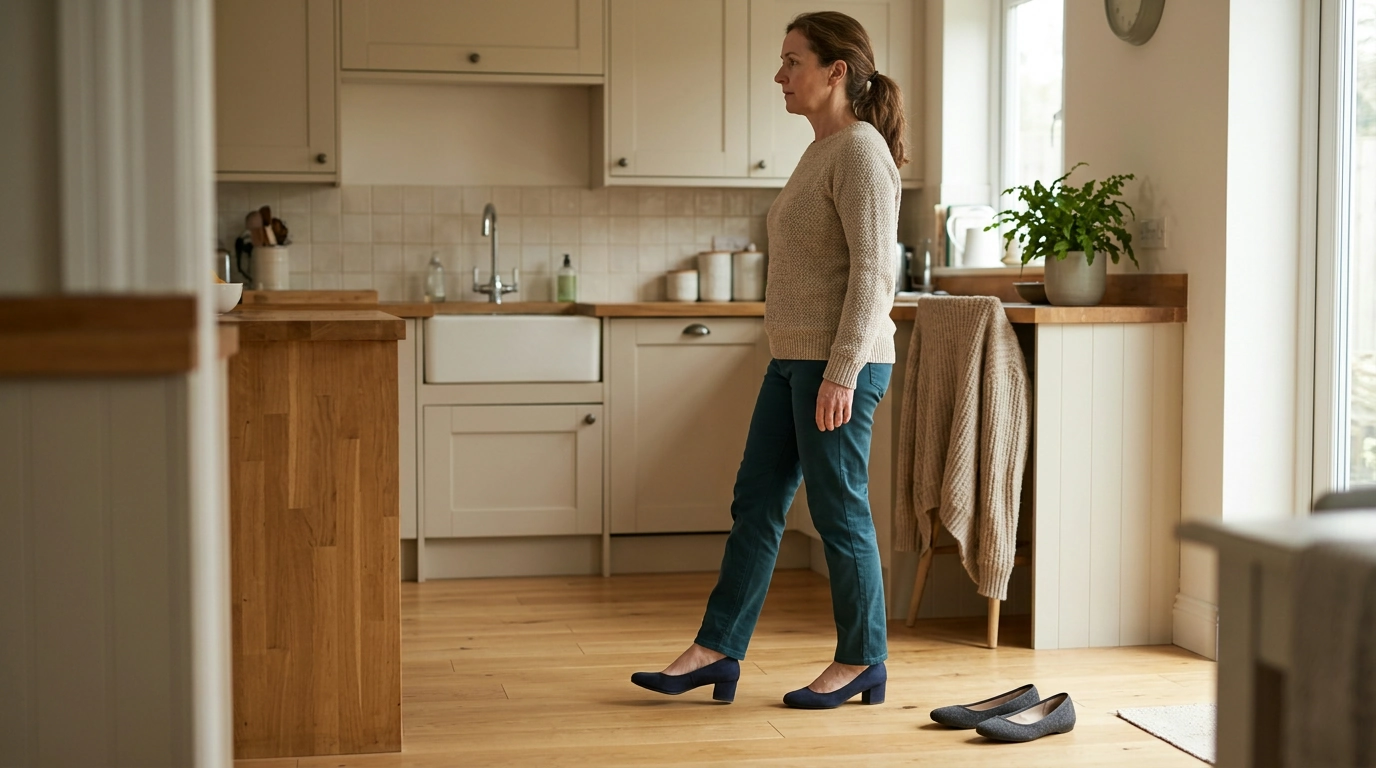
A confident walk in heels starts before your first step. The right fit, a manageable pace, and a little practice can help you feel steadier. You don’t need to walk like anyone else: the goal is to move comfortably and stay in control, whether you’re dressing for an event or simply trying a new pair at home.
Start with heels that work for you
Heel height is not a test of confidence. A shoe that stays securely on your foot at a height you can control will serve you better than a taller pair that makes every step uncertain. When you try on heels, walk indoors on a clear, level floor. Notice whether your heel slips, your toes feel cramped, or you have to grip with your toes just to stand still.
If you’re new to heels, start with a lower, stable pair and get familiar with how it feels before wearing it for an outing. Give yourself permission to decide that a shoe isn’t right for you. Practice can improve familiarity, but it won’t make every fit or heel height comfortable. Your most useful starting point is the pair that lets you stand and move without fighting the shoe.
Set your posture, then take smaller steps
Begin by standing tall without stiffening. Relax your shoulders, look ahead rather than down at your feet, and let your arms move naturally. You don’t need to hold a pose; you need enough ease to respond to the ground beneath you.
Walk slowly across a clear room using shorter, controlled steps. Place each foot where it feels stable instead of trying to copy a runway walk or force a long stride. Then practice starting, stopping, and turning. Those transitions are worth trying before a longer outing, when you may need to navigate a doorway, pause in a line, or change direction around other people.
Keep your first sessions short. When you’re ready to try stairs, use a handrail and prioritize secure footing over speed. If a route doesn’t feel safe in your shoes, changing shoes is the sensible choice.
| Practice stage | What to try | Move on when |
|---|---|---|
| Stand | Find a relaxed, balanced stance in your chosen shoes. | You can stand without feeling unsteady. |
| Walk | Take short steps across a clear, level room. | You can keep a comfortable, controlled pace. |
| Turn and pause | Slow down, stop, and change direction. | You can do both without rushing. |
| Wear out | Choose a short outing and bring backup footwear. | The shoes still feel manageable after practice. |
Build balance into your routine
A few calm minutes of practice are more useful than pushing on when your feet or legs are tired. Make space to walk near a stable counter or wall, clear clutter from the floor, and keep supportive everyday shoes available for afterward. As the movements become familiar, you can decide whether to extend your time in heels. There’s no required schedule or distance.
Stop if you feel sharp pain, numbness, or persistent discomfort. If walking has recently become difficult or painful, seek guidance from a qualified healthcare professional rather than trying to practice through it. For general information about foot symptoms, see the NHS guide to foot pain.
Style for the day you actually have
Before choosing your shoes, picture the whole day: how far you’ll walk, what surfaces you’ll cross, how long you’ll stand, and whether stairs are involved. A heel that feels manageable for a short indoor occasion may not be the pair you want for a long walk or an uneven route.
Try your full outfit at home, not just the shoes. Walk, sit, and turn so you can see whether a hem catches under your heel or limits your movement. You can bring flats for the trip there and back, or choose a lower heel from the start. An outfit that adapts to your plans isn’t a compromise. It gives you one less thing to worry about and more room to enjoy where you’re going.
Make confidence a practice, not a performance
Choose one achievable goal for each attempt. You might walk across a room at a smooth pace, make a comfortable turn, or wear your heels for a short occasion. Notice what feels easier than it did last time, and what still calls for a different shoe or setting. Someone else’s stride isn’t a useful measure of your progress.
If you’d like to keep the ideas together, our Walk Taller in Heels digital guide offers an optional way to revisit posture, balance, styling, and mindset. Our team also knows that consistency can be easier when you make room for it in your day; The Ultimate Productivity Blueprint is a separate option if you want broader help planning goals and daily routines.
When the heels feel too high
If you become unsteady, stop somewhere safe. Don’t try to solve the problem by walking faster or stretching into a longer stride. Change into your backup shoes if you have them, and give yourself time to regain secure footing.
FAQ
How to walk in heels that are too tall?
If you feel unsteady, stop somewhere safe and change shoes if possible. For future practice, choose a lower, more stable heel and use short, controlled steps; don’t push through pain or repeated loss of balance.
Why can’t I walk in high heels anymore?
Fit, walking surfaces, fatigue, or a change in your comfort may be contributing. Try a more supportive pair and a shorter practice session; if the difficulty is new or persistent, or comes with pain or numbness, seek advice from a qualified healthcare professional.
















Leave a comment