Heavy Duty Aluminum Pipe Wrench: Fit, Use & Care
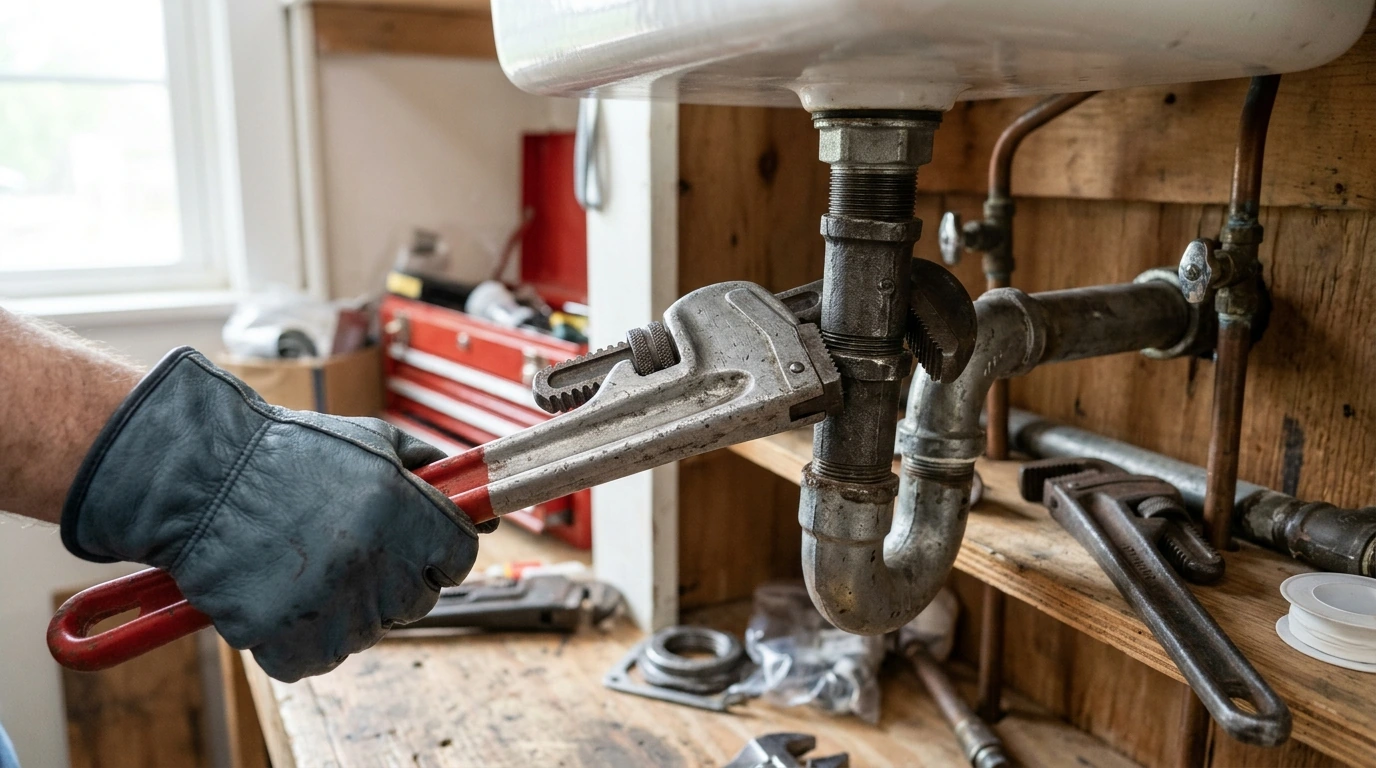
A pipe wrench should grip round stock securely without making the job harder than it needs to be. Our Heavy-Duty Aluminum Pipe Wrench is an option for plumbing repairs and other suitable pipe-fitting tasks. The right choice depends on more than the name of the tool: the jaws must fit the connection, and you need enough room to move the handle safely. Before you buy or begin work, consider the fitting, the surrounding space, and whether the surface can tolerate toothed jaws.
Where a Pipe Wrench Fits in the Toolbox
Pipe wrenches are made to grip and turn suitable round pipe and threaded fittings. You might use one to loosen a threaded connection or to hold a pipe steady while turning a fitting with a second wrench. The adjustable jaws let you seat the tool on the workpiece, while the teeth provide the grip needed for turning.
“Aluminum” describes this wrench; it does not mean the tool is intended only for aluminum pipe. What matters on a particular job is whether the jaws fit securely and the tool can be operated with control. A pipe wrench is not the best choice for every round surface, especially when marks would be a problem. Match the tool to both the connection and the finish before you start.
Choosing the Right Wrench for the Job
Before buying, compare the dimensions and listed jaw capacity on our product page with the pipe or fitting you plan to turn. Then look at the space around the connection. A wrench may fit the workpiece but still leave too little clearance to move its handle effectively.
Handle length involves a practical trade-off: a longer handle can provide more leverage, while a shorter tool may be easier to position in a tight area. Do not rely on leverage alone to solve a stubborn connection. If turning one part could move another, plan for a second wrench to provide a backup hold.
Consider the surface, too. Toothed jaws can mark a finished pipe or fitting. When preserving its appearance matters, choose another suitable tool rather than hoping a pipe wrench will leave no trace.
| Check | Why it matters | What to do |
|---|---|---|
| Pipe or fitting size | The jaws must fit the work securely | Compare the workpiece with the listed jaw capacity |
| Working space | The handle needs room to move | Measure clearance around the connection |
| Surface finish | Toothed jaws can leave marks | Choose another suitable tool for delicate finishes |
| Connection stability | Turning one part may move another | Use a backup wrench when needed |
Using a Pipe Wrench with Control
Adjust the jaws so they seat securely on the pipe or fitting, rather than catching only an edge. Position the wrench so pulling the handle tightens its grip on the work. Before applying force, make sure the connection is supported and that you have room to complete the movement without losing your balance.
Pull with steady pressure instead of a sudden jerk. Keep your hands clear of the jaws and other pinch points, and maintain a stable stance in case the connection moves unexpectedly. When a backup hold is needed, position the second wrench so it supports the adjoining part without putting your hands in the path of either handle.
Do not add a handle extension or strike the wrench to make a connection move. If it will not turn, stop and reassess the grip, direction of force, support, and condition of the connection rather than forcing the tool. Wear appropriate eye protection and follow applicable workplace procedures. For broader guidance on hand-tool hazards and safe use, see OSHA’s Hand and Power Tools guidance.
Care Between Jobs
After use, clean debris from the jaws so the teeth and adjustment mechanism remain free to work as intended. Look for visible damage, including compromised jaws or a bent handle, and store the wrench dry. Before each job, confirm that the adjustment moves properly and the jaws can be set securely on the workpiece.
If the tool is damaged, remove it from service instead of trying to compensate with more force. A quick inspection takes little time and helps you avoid relying on a wrench that cannot grip or move as expected.
Considering the Heavy-Duty Aluminum Pipe Wrench
Our Heavy-Duty Aluminum Pipe Wrench is an option when you want an aluminum pipe wrench for suitable pipe work. Visit the product page for the current price, availability, dimensions, jaw capacity, and other purchase details before deciding whether it fits your job.
Make the decision around the connection in front of you: confirm that the jaws can grip it, allow enough room to operate the handle, and choose a different tool if its surface needs protection. If you are organizing a larger repair schedule alongside the hands-on work, we also offer The Ultimate Productivity Blueprint, a separate digital guide for planning tasks and routines.
FAQ
What is a heavy-duty aluminum pipe wrench used for?
It is used to grip and turn suitable round pipe or threaded fittings. Check the fit and the space available to operate the handle for your specific job.
Can a pipe wrench damage a finished pipe?
Yes. Its toothed jaws may leave marks, so use a more suitable tool when preserving the finish is important.
How do I choose a pipe wrench size?
Compare your pipe or fitting with the wrench’s listed jaw capacity, then make sure there is enough clearance to move the handle.
What is the price of a 500 ft roll of heavy-duty aluminum foil?
We do not have a verified price for a 500 ft roll of heavy-duty aluminum foil. Check a current retailer listing for the roll’s price and specifications.
Where can I buy extra heavy duty aluminum foil?
Check grocery, restaurant-supply, or hardware retailers for extra heavy-duty aluminum foil, and confirm the roll’s length and thickness before purchasing.















Leave a comment