Overcoming Imposter Feelings: How to Feel Less Like a Fraud
You earned the promotion, completed the course, or received praise for a project. Yet instead of feeling proud, you find yourself wondering whether you fooled everyone. You may even expect someone to discover that you don’t belong.
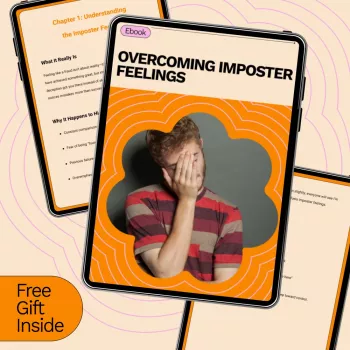
Imposter feelings can make an achievement feel surprisingly uncomfortable. They don’t have to be the final word on what you’re capable of, though. Our Overcoming Imposter Feelings eBook Guide is an option if you want to spend more time reflecting on self-doubt and approaching it with greater confidence.
When Success Doesn’t Feel Like Yours
Imposter feelings can appear in many situations. At work, you might attribute a successful presentation entirely to a helpful colleague. In school, you might dismiss a strong grade as an easy assignment. When starting something new, you may assume that asking questions means you aren’t qualified to be there.
These experiences vary from person to person. You might notice a passing thought after a particular achievement, or self-doubt might surface more often during periods of change. Either way, feeling uncertain is not the same as having evidence that you lack ability.
It’s also possible to recognize areas where you want to improve without dismissing everything you’ve done well. A balanced view makes room for both: you can be learning and still have earned your place.
Small Ways to Challenge the Fraud Feeling
When self-doubt shows up, you don’t have to force yourself to feel confident immediately. Start by getting curious about the thought behind the feeling. Are you telling yourself that your success was an accident, or that one mistake cancels out your progress?
Once you can name the thought, ask what evidence supports it and what evidence challenges it. For example, a project may have succeeded partly because your team helped. It may also have succeeded because you prepared carefully, solved a problem, or followed through. More than one thing can be true.
Reframing Common Self-Doubts
| Thought | A More Balanced Response |
|---|---|
| I only succeeded because I got lucky. | Luck may have played a part, but my effort and skills mattered too. |
| Everyone else knows more than I do. | Others are learning too, and asking questions is part of growth. |
| One mistake proves I don’t belong. | A mistake is something I can learn from, not a verdict on my ability. |
A balanced response doesn’t need to sound like a slogan. Choose words that feel honest enough for you to return to when the same doubt appears again.
Keep a Record of What You’ve Done
Consider keeping a short list of accomplishments and specific positive feedback. Include details: a deadline you met, a skill you practiced, or a comment about how your contribution helped. When you revisit the list, look for the actions you took rather than focusing only on the outcome.
You can also talk with someone you trust. A colleague, friend, mentor, or family member may help you see a situation from another angle. If a mistake is weighing on you, discuss what you can learn or do differently next time instead of treating it as proof that you’re inadequate.
These are general suggestions you can try on their own; they aren’t a description of specific exercises in our eBook.
Explore the Overcoming Imposter Feelings eBook Guide
If you’d like a resource focused on this topic, our Overcoming Imposter Feelings: How to Stop Feeling Like a Fraud – eBook Guide is available for $21.99 USD. It offers an opportunity to explore feelings of being a fraud and reflect on your relationship with self-doubt.
When deciding whether a guide is right for you, consider what kind of support you’re looking for. A self-guided resource may be a useful place to begin reflecting at your own pace. If you want individual guidance or your distress is interfering with daily life, a qualified mental health professional can offer a different kind of support.
Make Space for Steady Progress
Rather than trying every suggestion at once, choose one manageable habit. You might write down one contribution after a meeting or pause to question a self-critical thought after receiving feedback. Return to that practice regularly and notice whether it helps you see the situation more fully.
If routines and goal setting are also on your mind, The Ultimate Productivity Blueprint is a separate, optional guide to consider. It can complement your interest in building routines without making productivity a measure of your worth.
Persistent distress or difficulty functioning can be a reason to seek professional support. The National Institute of Mental Health shares information on caring for your mental health, including when to consider seeking help.
FAQ
What are imposter feelings?
Imposter feelings can involve doubting your abilities or feeling undeserving of success, even when there is evidence of your competence. They can show up differently for different people.
Can an eBook help with feeling like a fraud?
An eBook can be a starting point for reflecting on self-doubt, though it cannot guarantee a particular outcome. It is not a substitute for professional mental health care.
What can I do when self-doubt appears after an achievement?
Acknowledge the feeling, then review the effort, skills, and choices that contributed to your achievement. You can also talk about your doubts with someone you trust.
















Leave a comment