Common Toddler Phrases and How to Encourage Conversation
What are some common phrases toddlers say?
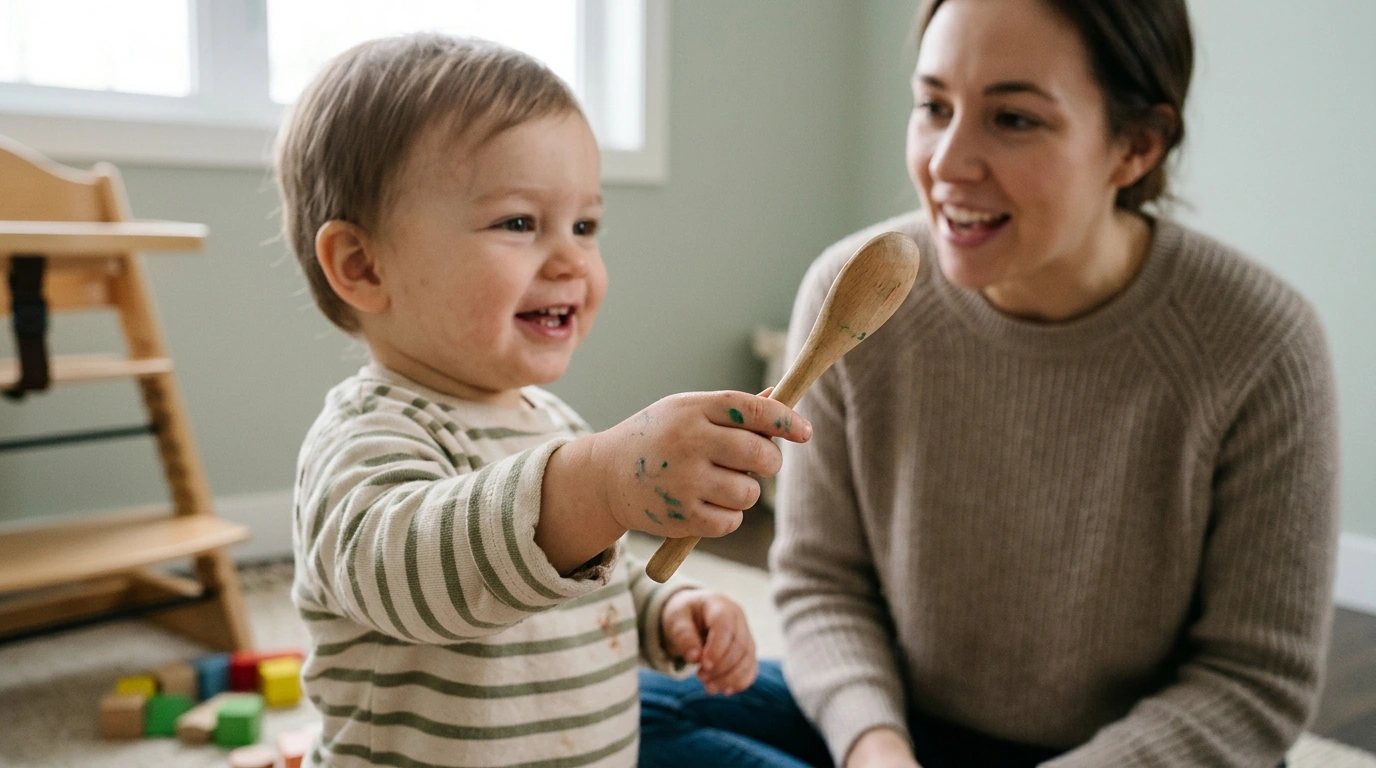
Toddlers often use short phrases to tell you what they want, share an observation, or express a big feeling. You might hear “more milk,” “my turn,” or “all done” throughout the day. Some children use these combinations earlier than others, and their words may not always sound clear at first.
As your toddler practices, listen for meaning as well as pronunciation. A pointed finger and “want ball” can be a successful request, even if the words are still developing.
What phrases do toddlers use to ask for things?
Everyday needs give toddlers plenty of reasons to communicate. Common requests include:
- “More please” or “more snack”
- “Want water” or “want juice”
- “Help me”
- “Pick me up”
- “Read book”
You can respond by modeling a slightly longer phrase. If your child says “more apple,” you might say, “You want more apple, please.”
What phrases do toddlers use during play?
Play brings out phrases such as “my turn,” “your turn,” “go fast,” “big truck,” and “do it again.” Toddlers may also narrate what they see with combinations like “doggy running” or “baby sleeping.” Repeating their words back and adding one detail gives them a natural example to hear.
How do toddlers express feelings and independence?
“No,” “mine,” “I do it,” and “don’t want it” are familiar parts of toddler communication. You may also hear “I’m happy,” “I’m scared,” or “miss Mommy.” These phrases help children practice setting boundaries and naming emotions, even when they need your help managing those feelings.
How can you encourage more conversation?
Talk about what you are doing together, pause to give your child time to respond, and follow their interests. Simple choices such as “red cup or blue cup?” invite an answer without putting pressure on them to say a perfect sentence. Books, songs, and pretend play offer opportunities to hear and practice new words.
Our team knows toddler routines can change quickly. For a related look at changing routines, see our guide to toddler nap refusal and sleep changes.
FAQ
When should you talk to a pediatrician about a toddler’s language development?
Talk to your pediatrician whenever you have concerns about your child’s communication, especially if your child loses words or skills they previously had. Your pediatrician can discuss developmental milestones and recommend an evaluation if needed.














Leave a comment