Toddler Nightmare? What to Do Right When They Wake
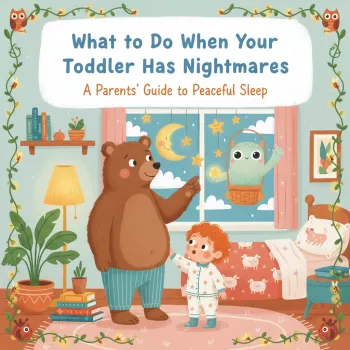
What should I do in the moment when my toddler wakes up from a nightmare?
Start with calm, quick comfort
When your toddler jolts awake scared, your first job is to help their body feel safe again. Go to them right away, keep the lights low, and speak in a slow, steady voice. A simple phrase like “You’re safe. I’m here.” works better than lots of questions. Offer brief physical comfort if they want it—hand on their back, a hug, or picking them up—then pause so their breathing can settle.
Ground them in the present (without arguing about the dream)
Nightmares feel real in the moment, so avoid debating details (“There’s no monster”) if it makes them more upset. Instead, use gentle grounding: name what’s real right now (“You’re in your bed. It’s nighttime. Mommy/Daddy is here.”). If they’re verbal, invite one tiny fact about the room (“Can you show me your blanket?”). Keep your tone confident and boring—in a comforting way.
Do a short reset routine
A quick, repeatable routine helps their brain switch from alarm back to sleepy. Try this 2–5 minute sequence:
- Water sip (if they want it) to break the panic loop.
- One comfort object (stuffed animal/blanket) placed in their arms.
- One calming cue (slow counting, a short lullaby, or “smell the flower, blow the candle” breathing).
- One reassuring boundary: “I’ll stay for two minutes, then it’s back to resting.”
Return to sleep with minimal stimulation
Keep the room dim and voices quiet. Skip screens, bright overhead lights, snacks, or long conversations—those can fully wake them up and make repeat wakeups more likely. If they ask to talk about the dream, offer a quick summary (“That was scary”) and then redirect to rest. If your child is very worked up, sit beside the bed until their body relaxes, then gradually reduce how much you do each time they wake.
For a step-by-step “rescue routine” plus a simple plan to reduce repeat nightmares, see this toddler nightmare guide.
FAQ
How can I tell the difference between a nightmare and night terrors?
With nightmares, your toddler is usually awake enough to recognize you and can be comforted, even if they’re scared. With night terrors, they may look awake but seem confused, hard to console, and may not remember it in the morning.















Leave a comment