DIY Cat Enrichment: 4 Stimulating Homemade Toy Ideas
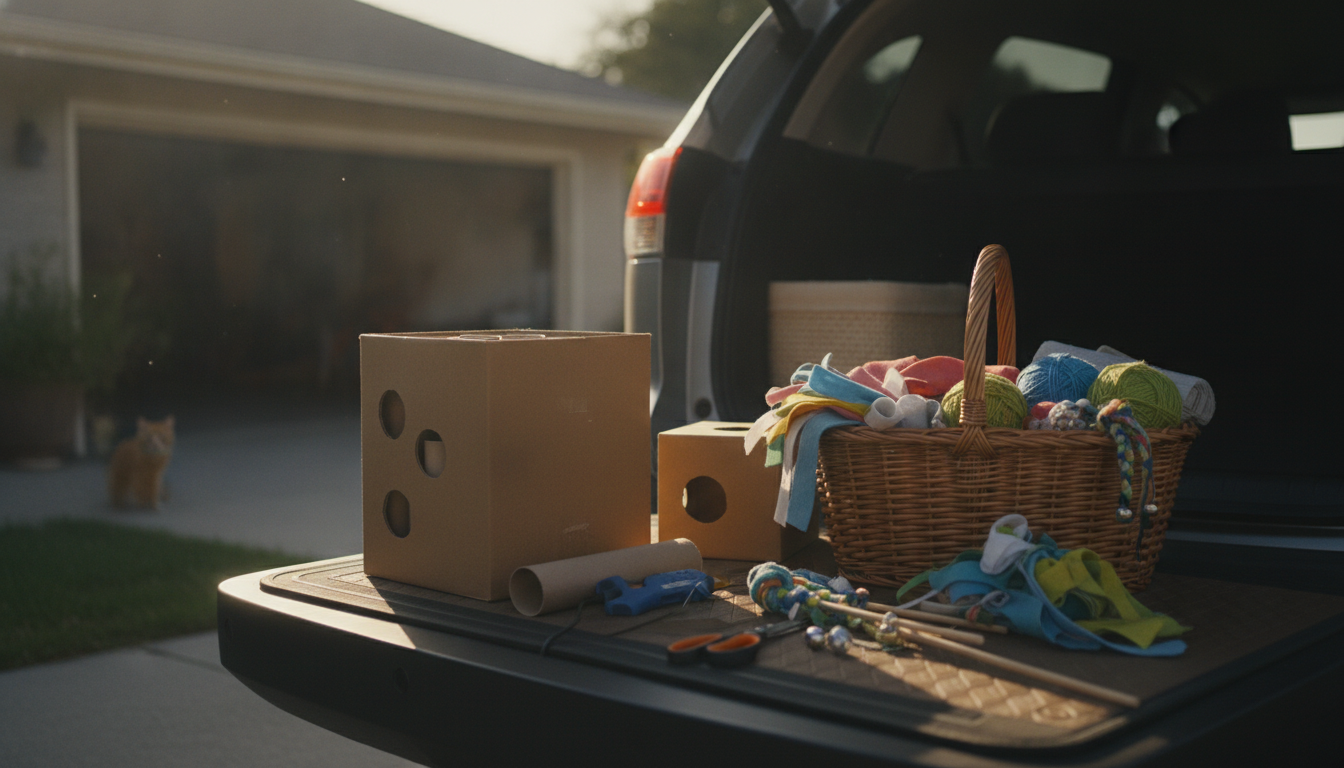
How do you make homemade stimulating toys for cats?
Homemade stimulating cat toys work best when they tap into natural hunting behaviors: stalking, pouncing, grabbing, and “winning” a small prize. Use sturdy, non-toxic household items, keep pieces large enough not to swallow, and rotate toys so they stay interesting. For more ideas that pair toys with play routines and easy home upgrades, see this indoor cat enrichment guide.
1) Cardboard “prey” puzzle box
Cut several paw-sized holes in a small cardboard box (shoe-box size). Drop in a few crumpled paper balls, plastic bottle caps (large), or a couple of treats. Close the lid and let your cat fish items out. Start easy with bigger holes, then make it harder by shrinking hole size or adding inner cardboard dividers.
2) Sock “kicker” toy (for bunny-kicking)
Fill an old sock with crinkly paper and a little stuffing, then knot the open end tightly. For extra interest, tuck a pinch of dried catnip or silvervine inside (skip if your cat gets overstimulated). The long shape encourages wrestling and back-leg kicks.
3) Paper-bag ambush tunnel
Lay a paper grocery bag on its side, open and flattened slightly so it makes a tunnel. Cut two or three “peek” windows along the sides. Toss in a lightweight ball or drag a string toy past the openings so your cat can swat from cover. Remove any handles to prevent tangling.
4) Toilet-paper-roll treat spinner
Fold one end of an empty toilet-paper roll inward. Add a few treats or kibble, then fold the other end closed. Poke 2–4 small holes in the tube so scent escapes. Your cat will bat it around to shake treats loose; make holes slightly larger as they learn the game.
Safety and freshness tips
Avoid yarn, ribbon, rubber bands, and anything that can shred into strings. Supervise new toys, discard damaged items, and store wand/string toys between sessions. Refresh interest by rotating 2–4 toys every few days and pairing play with a small meal to satisfy the “hunt-catch-eat” cycle.
FAQ
How can I rotate cat toys to keep my cat from getting bored?
Keep a small “active” set out (2–4 toys) and put the rest away in a closed bin. Swap in different textures and toy styles every few days, and reintroduce favorites after a week or two so they feel new again.
















Leave a comment