Calm an Anxiety Attack Fast: 5 Steps That Help
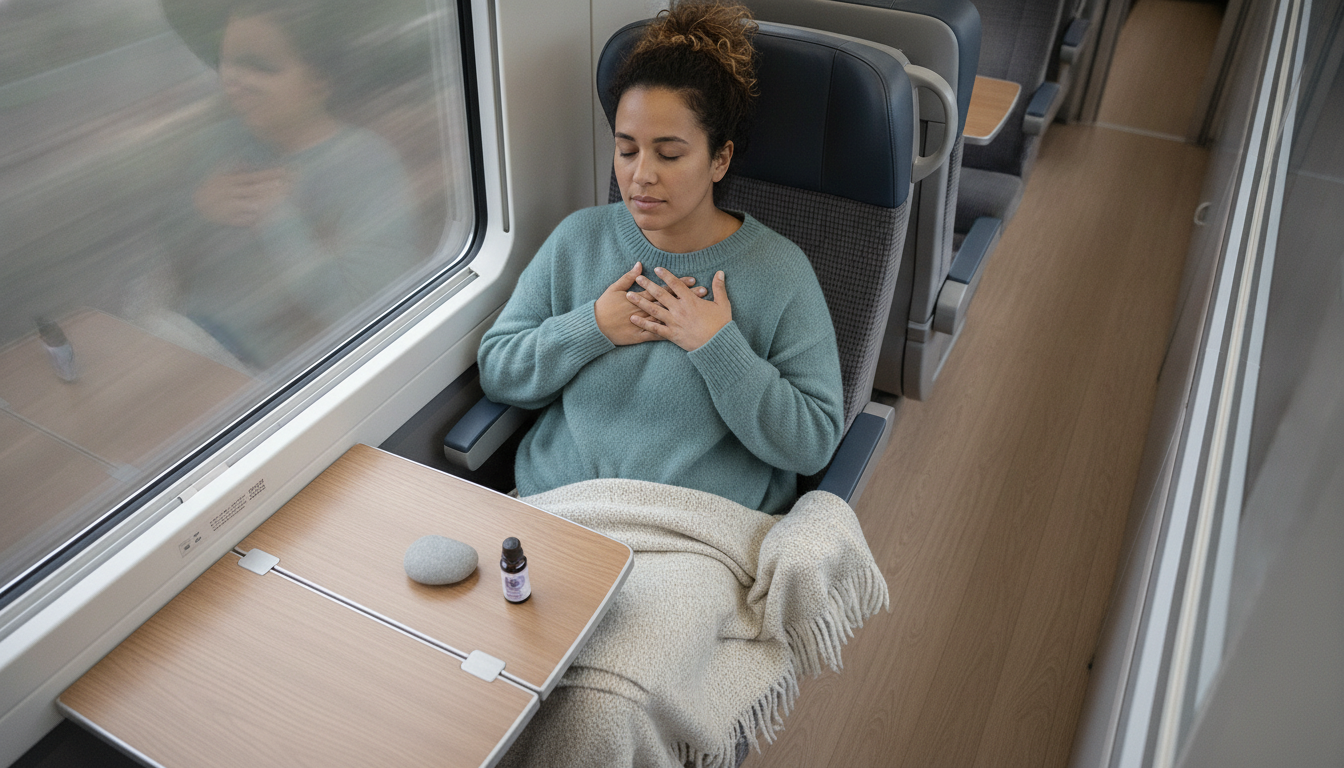
How to calm down an anxiety attack?
An anxiety attack can feel sudden and overwhelming, but it usually passes—even when your body is telling you it won’t. The goal is to signal safety to your nervous system and give your mind something simple and concrete to do.
1) Ground your body first
Plant both feet on the floor and press down gently. Relax your shoulders, unclench your jaw, and place one hand on your chest or belly. This physical “anchor” helps interrupt the spiral and brings attention back to the present.
2) Slow your breathing (without forcing it)
Try breathing in through your nose for 4 seconds, then exhale slowly for 6–8 seconds. Longer exhales cue your body to downshift. If counting feels stressful, simply aim for a softer, slower exhale than inhale.
3) Use a quick grounding exercise
Do the 5-4-3-2-1 method: name 5 things you can see, 4 you can feel, 3 you can hear, 2 you can smell, and 1 you can taste. This redirects attention away from catastrophic thoughts and back to sensory reality.
4) Re-label what’s happening
Say (out loud if you can): “This is anxiety. It’s uncomfortable, not dangerous. It will peak and pass.” Labeling reduces fear-of-fear and helps your brain stop treating sensations like an emergency.
5) Reduce stimulation and add comfort
If possible, step into a quieter space, dim bright lights, and sip cool water. Gentle movement can help (slow walking, shoulder rolls). Avoid checking your pulse repeatedly—it can keep the alarm loop going.
Build a go-to routine for next time
Having tools ready can make episodes feel less scary and more manageable. For a simple, practical setup you can keep on hand, visit this guide: Daily Calm Toolkit: 4-in-1 Anxiety Relief Bundle.
FAQ
When should I seek help for anxiety symptoms?
Get help if attacks are frequent, worsening, interfering with work or sleep, or if you’re avoiding activities out of fear. Seek urgent care right away for chest pain, fainting, or new symptoms that could be medical.














Leave a comment