Self-Love vs Mindfulness Meditations: Calm & Inner Healing
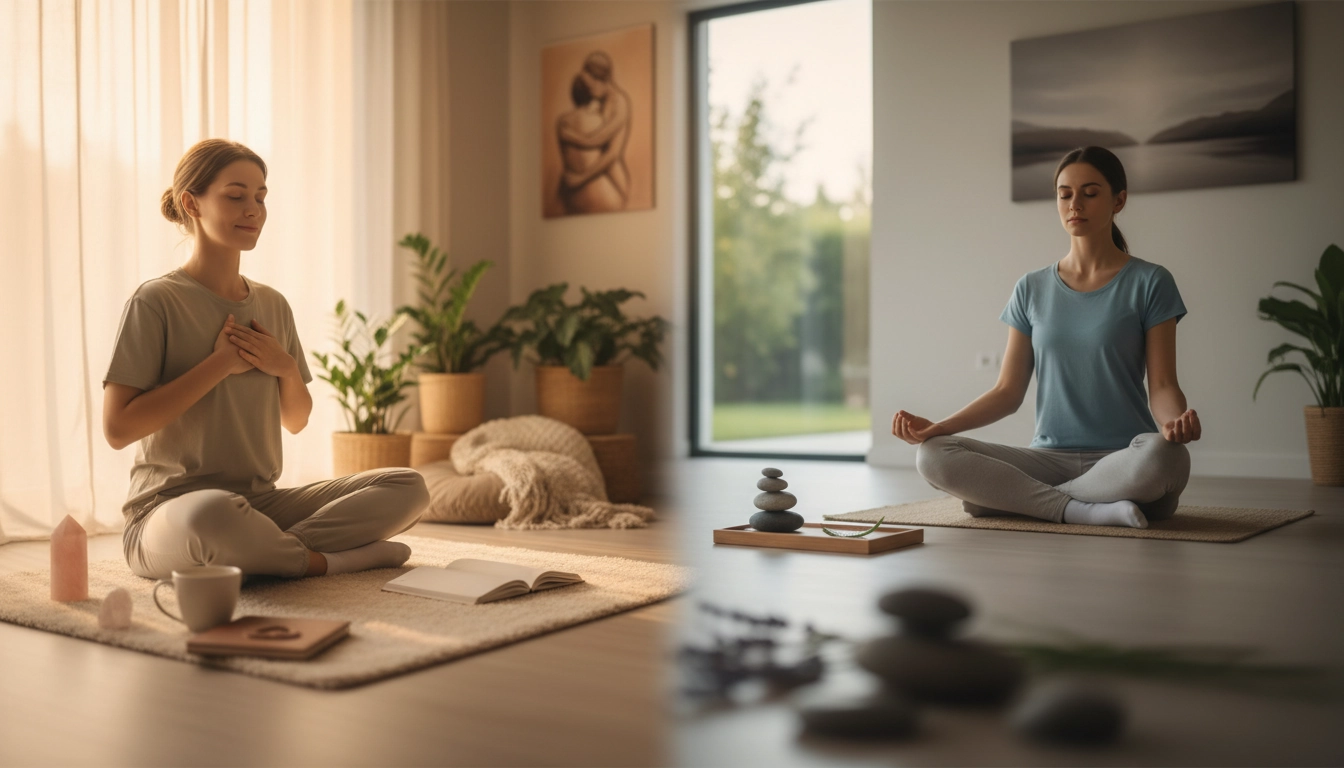
What’s the difference between self-love meditations and mindfulness meditations for calm and inner healing?
Both practices can help you feel steadier and more supported, but they aim their attention in different directions. Mindfulness meditation trains you to notice what’s happening right now—sensations, thoughts, emotions—without immediately judging or fixing it. Self-love meditation intentionally adds warmth, compassion, and worthiness work to what you notice, which can be especially helpful when inner healing involves shame, self-criticism, or feeling “not enough.”
Mindfulness meditations: calm through awareness
Mindfulness meditations for calm typically focus on anchoring attention (often on the breath) and observing mental activity as it comes and goes. The soothing effect comes from learning that you can be present with discomfort without being pulled into it. Over time, this can reduce reactivity, help regulate stress, and create space between triggers and your response.
For inner healing, mindfulness supports clarity: you recognize patterns, body cues, and emotional waves earlier, which makes it easier to choose healthier coping skills.
Self-love meditations: inner healing through compassion
Self-love meditations are designed to shift your relationship with yourself. They may include compassionate phrases, forgiveness, re-parenting imagery, or affirmations that address worthiness and belonging. Instead of only observing a painful emotion, you practice meeting it with kindness—like offering reassurance to a younger version of you or placing a hand over your heart and sending supportive language inward.
This can be powerful for healing because it directly counteracts harsh self-talk and builds a felt sense of safety. It’s not about pretending everything is fine; it’s about learning to stay on your own side while you grow.
Which one should you choose?
If your main goal is settling an overactive mind and building daily steadiness, mindfulness can be a strong foundation. If calm is blocked by self-judgment or old emotional wounds, self-love practices often feel more nourishing. Many people combine both: mindfulness to notice what’s true, self-love to respond with care.
For a structured approach, explore this guided plan: self-love and worthiness meditations (7-day audio plan).
FAQ
How do I know if I need self-compassion instead of more mindfulness?
If you can observe your thoughts but still feel stuck in shame, self-criticism, or emotional loneliness, self-compassion practices may be the missing piece. A good sign is when “noticing” turns into judging yourself for having thoughts at all.
















Leave a comment