7 Brain Enrichment Toys to Keep Cats Busy at Night
What are some good brain enrichment toys for cats?
If your cat is bright-eyed at 2 a.m., knocking pens off the nightstand, you’re seeing a smart brain asking for a job. Our team recommends mixing puzzle-style toys with quick “hunt and capture” options so you can rotate activities and keep novelty high without buying a mountain of stuff.
1) Treat puzzle balls and rolling dispensers
These toys make your cat bat, chase, and problem-solve to release kibble or treats. Start with larger, easy-to-release openings, then increase difficulty once your cat is confidently getting rewards. Use small portions so you can offer multiple short rounds instead of one long session.
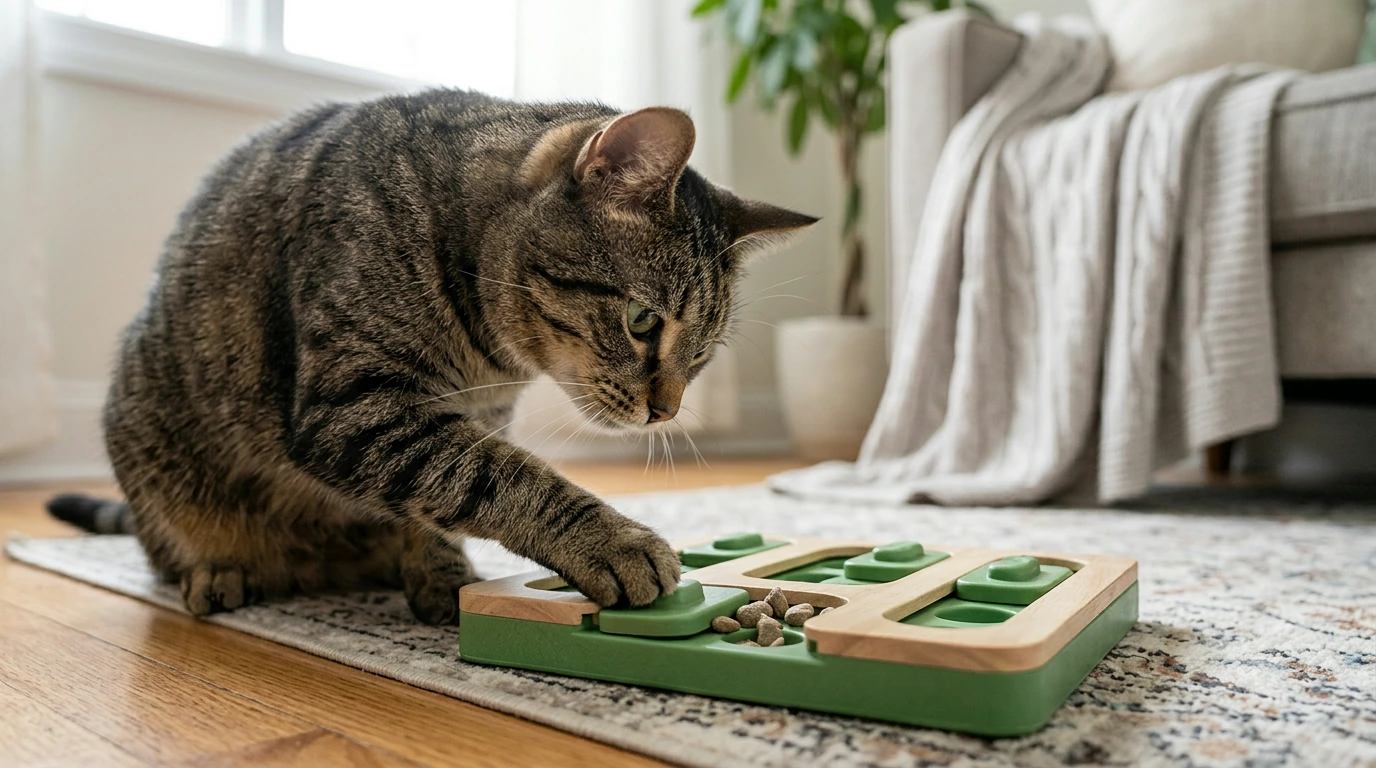
2) Puzzle boards (sliders, cups, and covers)
Flat puzzle boards give your cat a clear “task list”: slide, lift, and uncover. Pick models with varied mechanisms (doors, wells, rotating lids) to prevent your cat from mastering everything in one day. Supervise early sessions so your cat doesn’t chew loose parts.
3) Snuffle mats and foraging boxes
Snuffle mats encourage slow, nose-led searching—great for indoor cats who need calmer enrichment. You can also make a foraging box with crumpled paper and a few treats sprinkled throughout; keep materials large enough to avoid swallowing and replace anything that gets soggy or shredded into small bits.
4) Wand toys with “brain rules”
Wand play becomes mental enrichment when you add patterns: pause behind furniture, change speed, and let your cat plan an approach. Finish with a successful “catch,” then offer a small treat or meal to complete the hunt cycle and reduce frustration.
5) Track toys and interactive circuits
Ball-in-track toys reward persistence and help cats practice prediction and timing. Choose sturdy tracks that don’t pop open easily, and occasionally hide a treat nearby to encourage investigation beyond repetitive batting.
6) Catnip/silvervine kickers and scent toys
Scent-driven toys can reset boredom fast. Rotate them: leave one out for a day, then store it away to “recharge” novelty. If your cat gets overstimulated, offer scent toys after active play instead of before.
For more ways to build a routine (and easy DIY options), visit our complete guide: Indoor Cat Enrichment: DIY Toys, Play Routines, and Home Upgrades.
FAQ
How often should I rotate my cat’s enrichment toys?
Rotate a small set every 3–7 days so the same items feel “new” again. Keeping 4–6 options out at a time usually prevents clutter while maintaining variety.














Leave a comment