Baby Rash or Irritation? What Parents Should Notice

A new patch of redness can feel alarming, especially on newborn skin. We want you to have a calm way to notice what is happening and decide when to ask for help. Everyday moisture, friction, and products can irritate skin, but a rash cannot be diagnosed by appearance alone.
Start with how your baby is doing
Before concentrating on the patch, look at your baby as a whole. Are they feeding as usual, alert when awake, and breathing comfortably? These observations matter more than finding the perfect word for a skin change.
Seek urgent medical help if your baby has trouble breathing, seems very unwell, or has a rash that does not fade when pressed. If a baby under 3 months has a temperature of 100.4°F (38°C) or higher, contact a healthcare professional promptly. You can read more about these warning signs in the NHS guidance on rashes in babies and children and its guidance on fever in children.
If your baby otherwise seems well, a photo and a short note about when the change appeared may help when you speak with a clinician. Skin can look different a few hours later, and you do not have to rely on memory alone.
Look for patterns, not a label
Notice where the change appears, its color and texture, whether the area looks dry or moist, and whether touching or cleaning it seems to bother your baby. Then consider what has been against that skin. Clothing may rub one spot; moisture may collect in a fold; a wet diaper may keep skin in contact with moisture or stool.
Those circumstances provide context, not a diagnosis. Different conditions can look alike, and a familiar-looking patch may still need professional attention. Our table is a quick observation aid—not a test for deciding what your baby has.
| What you notice | Useful question | Next step |
|---|---|---|
| Redness in the diaper area | Has the skin been in contact with moisture or stool? | Change diapers promptly and clean gently. Ask a clinician if the area worsens or does not improve. |
| A patch where fabric or a product touches skin | Is there a new detergent, wipe, lotion, or garment? | Avoid a suspected irritant and watch for changes. Seek advice if the patch spreads or persists. |
| A rash with fever, or a baby who seems unwell | Is your baby feeding, breathing, and responding as usual? | Contact a healthcare professional promptly; seek urgent help for severe symptoms. |
Keep newborn skin care simple
While you observe a mild-looking change, gentle care is a sensible starting point. Clean with lukewarm water and pat the skin dry rather than rubbing it. Change a wet or soiled diaper promptly, and take care when drying areas where moisture collects.
When you need a cleanser or moisturizer, choose a fragrance-free option and avoid introducing several new products at once. That makes it easier to notice whether a change follows something new. Ask a healthcare professional before using a medicated cream on your baby or trying to treat a persistent rash, particularly if your baby is a newborn. Simple care should not delay a call when your baby seems unwell or the skin is getting worse.
When to call and what to share
Call your baby’s healthcare professional if a rash is spreading, blistering, oozing, painful-looking, or not improving. Call whenever you are unsure, too. You do not need to identify the rash before asking a question.
It can help to have a few details ready: your baby’s age; their temperature, if you measured it; when you first noticed the rash; where it appears; and any recent changes in wipes, detergent, lotion, or clothing. Mention changes in feeding or behavior, even if they seem separate from the skin. A clinician can interpret those details alongside an examination. Your goal is to make that conversation easier, not to self-diagnose.
A printable reminder for uncertain moments
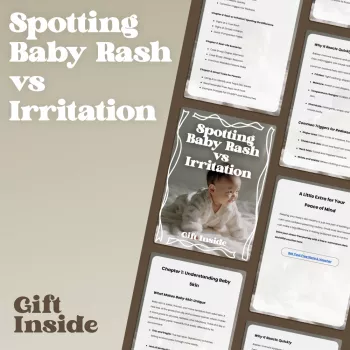
When you are tired or concerned, a short set of prompts can be easier to use than trying to remember everything at once. Our Spotting Baby Rash vs Irritation printable guide is a digital download you can keep close at hand while noting what you observe and preparing questions for your baby’s healthcare professional.
It is a companion to pediatric advice, not a replacement for it. No printable can identify a rash or decide whether treatment is needed. If you prefer a ready-to-use reference for uncertain moments, you can view the guide; if your baby has a warning sign, seek care rather than spending time comparing descriptions.
For parents who also like keeping everyday notes and routines in one place, our Ultimate Productivity Blueprint is a separate, general planning resource. It is not a baby-health guide. Whether you use a printable, a notebook, or your phone, the useful step is the same: record what you notice and share it with a professional when you need advice.
FAQ
Can I tell whether a baby rash is irritation just by looking?
Not reliably. Location and possible triggers offer useful context, but different skin conditions can look alike. Contact a healthcare professional if you are uncertain, especially with a newborn.
When does a baby rash need urgent attention?
Seek urgent help if your baby has trouble breathing, seems very unwell, or has a rash that does not fade when pressed. Contact a healthcare professional promptly for a temperature of 100.4°F (38°C) or higher in a baby under 3 months.















Leave a comment