Seasonal Storage Rotation: A Simple Checklist

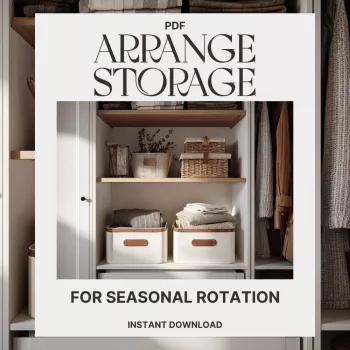
Seasonal storage works best when putting things away also makes them easy to find again. You do not need to reorganize your whole home every time the weather changes. A repeatable routine—decide what stays accessible, prepare what is leaving daily use, and record where it goes—can make the next changeover much simpler. Our How to Arrange Storage for Seasonal Rotation printable checklist can help you keep those steps together.
Choose a rotation date and a manageable scope
Start with one familiar swap, such as putting away winter hats and gloves while bringing warm-weather accessories into reach. That is easier to finish—and repeat—than emptying every closet at once.
Choose two to four rotation dates a year based on your local weather and household routines. Spring and fall may be enough for clothing and bedding, while sports gear or holiday decorations may need their own dates. Treat these as calendar reminders, not rigid deadlines: an unusually warm week does not mean you must pack every coat.
Before you begin, separate truly seasonal belongings from things you use throughout the year. A rain jacket, everyday walking shoes, or an extra blanket may deserve an accessible spot even when related items go into storage. The goal is to free useful space without burying something you will need next month.
Sort before anything goes into storage
Work through one category at a time: clothing, bedding, decorations, sports gear, or outdoor accessories. For each item, make one of four decisions: keep accessible, store for next season, donate or recycle, or repair or clean. A small “needs attention” group keeps unfinished tasks from disappearing into a sealed bin.
Ask whether clothing still fits, whether equipment is in usable condition, and whether you are likely to use each item again. Storage space is valuable; you do not have to reserve it for something you already know you will not bring back out. For ideas on reducing waste and finding responsible ways to reuse items, see the EPA’s guidance on reducing waste. Check local donation and recycling rules before dropping anything off.
Give each category a suitable home
Choose a location by weighing three things: how soon you will need the items, how much room they take, and whether the space is clean and dry. Put next-season essentials where you can retrieve them without moving a stack of rarely used decorations. Reserve harder-to-reach shelves for belongings you expect to access only occasionally.
Containers should protect their contents while remaining comfortable to move. Divide heavy items among smaller containers rather than filling one large bin to the brim. Clean and fully dry clothing, bedding, and gear before packing them; damp or dirty items can create an unpleasant surprise at the next rotation.
| Category | Before storing | Suggested location | Label reminder |
|---|---|---|---|
| Seasonal clothing | Clean and dry | Closet shelf or suitable bin | Season, sizes, and contents |
| Bedding | Wash and dry thoroughly | Clean linen storage | Season and bed size |
| Decorations | Check for damage and group by occasion | Less-accessible shelf | Occasion and fragile contents |
| Outdoor gear | Remove dirt and check condition | Appropriate utility storage | Season and equipment type |
Make labels useful at the next changeover
“Miscellaneous” may make sense while you are packing, but it offers little help six months later. Write the season and specific contents on each container: “Summer clothes—adult medium, shorts and swimwear” is more useful than “Summer.” Add a room, bed size, or occasion when that detail will help you put things back.
Keep a short inventory with each container’s label and location. It can be a note on your phone or a page stored with your household records. Include anything you discovered during sorting, such as a zipper to repair or gloves to replace. That way, the next rotation starts with a plan instead of another search.
If your schedule is crowded, an AI-powered planner can help draft a category list or spread tasks across a few days. Our checklist offers a place to keep the hands-on steps in order; you can also use The Ultimate Productivity Blueprint if you want broader support for planning routines. Whatever tool you use, compare the plan with your actual storage space, belongings, and available time before following it.
Use the same checklist for the final pass
Before you call the rotation done, follow the same sequence each time: clean, sort, pack, label, record the location, and bring the incoming season’s items into reach. Check that daily-use items are easy to get to and that no container is too heavy to move comfortably. Our How to Arrange Storage for Seasonal Rotation printable checklist can serve as a reminder of that sequence when the next changeover arrives.
After each rotation, take a minute to update your inventory. Note a container that was difficult to reach, a label that was too vague, or an item you needed sooner than expected. Small adjustments help your system improve without requiring a full reset every season.
FAQ
How often should seasonal storage be rotated?
Many households can start with a spring and fall changeover. Add smaller rotations if your climate, activities, or available space call for them.
What should be done before packing seasonal clothes?
Sort out items you no longer need, then clean and fully dry what remains before packing and labeling it.
What information belongs on a seasonal storage label?
Include the season, a clear description of the contents, and useful details such as sizes or the room the items belong in.















Leave a comment