Break the Tension: 2-Minute Stress Resets That Work
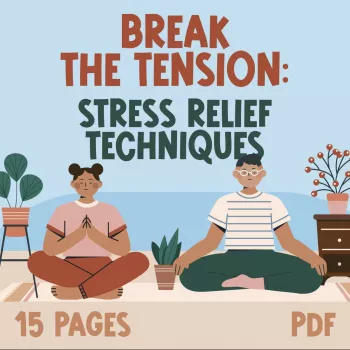
Stress often shows up as a tightened jaw, shallow breathing, racing thoughts, and a never-ending to-do list. The most effective relief usually comes from small, repeatable micro-resets that calm the body first, then steady attention, and finally reduce the triggers that keep stress cycling. The techniques below are designed to work in real life—between meetings, during commutes, or at the end of a long day.
Know the signals: when tension is building (and what it’s doing to the body)
Stress rarely arrives all at once. It tends to build in layers—body first, then mood, then focus. Catching it early makes the reset faster and easier.
Common early cues
- Shallow breathing or frequent sighing
- Shoulders creeping upward, neck tightness, clenched hands
- Stomach flutter, appetite changes, or a “wired” feeling
- Irritability, rumination, and looping thoughts
- Difficulty focusing or jumping between tasks
Why the body reacts this way
When stress hits, the sympathetic nervous system ramps up (the body’s “on alert” mode). Tight muscles and upper-chest breathing can reinforce that signal—so even after the trigger passes, the body stays keyed up. The fastest relief often comes from changing physiology first: a slower exhale, a softer jaw, and a grounded stance.
A simple check-in
Rate stress from 0–10. Notice where tension sits (jaw, shoulders, belly, hands). Then pick one technique below and do it for 60–120 seconds—no debate, no optimizing.
Breathing exercises that lower the volume fast
Breathing is a direct dial into arousal. The goal isn’t huge breaths—it’s a smoother rhythm, especially on the exhale.
Physiological sigh (30–60 seconds)
Inhale through the nose, then “top up” with a second short inhale. Exhale slowly and fully. Repeat 2–3 cycles. This quick pattern can downshift the body when you feel keyed up.
Box breathing (2–4 minutes)
Inhale for 4, hold for 4, exhale for 4, hold for 4. Keep shoulders relaxed and breathe low into the belly. If 4 feels strained, use 3 counts.
Extended exhale breathing (2–5 minutes)
Inhale for 4, exhale for 6–8. Keep the exhale unforced and steady—think “long and smooth,” not “big.”
Breathing posture cues
- Tongue relaxed, jaw unclenched (lips can be gently closed)
- Ribs expand sideways; shoulders stay heavy
- Feet grounded; sit back in the chair instead of perching forward
- Avoid over-breathing or “gasping deep” when anxious—smaller, calmer breaths often work better
Two-minute stress reset menu
| Situation | Technique | How to do it | Time |
|---|---|---|---|
| Mind racing before a task | Extended exhale | Inhale 4, exhale 6–8 for 10 breaths | 2 min |
| Body feels keyed up | Physiological sigh | Double-inhale + long exhale, repeat 3 times | 1 min |
| Overwhelm from too many tasks | Grounding 5-4-3-2-1 | Name 5 see, 4 feel, 3 hear, 2 smell, 1 taste | 2 min |
| Tension headache starting | Neck/shoulder drop + breath | Exhale and lower shoulders; slow nasal breaths | 2 min |
| Stress after a difficult message | Mini-meditation label + breathe | Silently note “thinking”/“feeling,” return to breath | 2 min |
Quick meditations that fit into a busy day
Meditation doesn’t have to mean a long sit. Think of these as attention “re-centers” that reduce reactivity and restore choice.
One-minute “arrive” practice
Feel both feet. Soften the face. Take five slow breaths. Name the next right step (one concrete action you can do in under 5 minutes).
Two-minute focus reset
Pick one anchor—breath, sounds, or contact points (feet on floor, hands on desk). Every time attention drifts, gently return. The win is the return, not perfect focus.
Emotion labeling
Quietly name what’s present (“stress,” “worry,” “anger”) without analyzing it. Pair it with a longer exhale to reduce intensity.
Micro-compassion
Place a hand on your chest. Inhale gently. Exhale slowly. Use a brief phrase: “This is hard; take one step.” It’s not about positivity—just steadiness.
Grounding techniques for anxiety spikes and mental overload
Grounding pulls attention out of spirals and back into the immediate environment. It’s especially useful when the mind is catastrophizing or replaying conversations.
5-4-3-2-1 sensory scan
Name five things you see, four you feel, three you hear, two you smell, and one you taste. Keep it simple and factual.
Temperature shift
Hold something cool (a cold drink, a chilled pack) or splash cool water on your face. The physical contrast can interrupt escalation and signal a reset.
Muscle release ladder (2–4 minutes)
Name-and-place
Time management tips that reduce stress at the source
Shrink the to-do list
Time-blocking with buffers
Two-minute rule (selective)
The “next physical action” rule
Boundary scripts
A simple daily plan: stack small resets for lasting relief
Using a guided toolkit to stay consistent
For a ready-to-use set of breathing, mini-meditations, grounding prompts, and planning cues, see Break the Tension: Stress Relief Techniques – Breathing Exercises, Quick Meditations, Grounding Techniques, and Time Management Tips to Reduce Stress.
If stress is closely tied to study overload and concentration strain, a structure-first approach can help: Study Skills Mastery Guide | Focus Tips, Study Methods, Memory Techniques.
For additional reputable background on stress and coping, visit the American Psychological Association, the National Center for Complementary and Integrative Health, and the Mayo Clinic.
FAQ
How fast do breathing exercises work for stress?
Often within 30–120 seconds you can feel a noticeable shift, especially with longer exhales or the physiological sigh. The effect tends to strengthen with regular practice.
What’s a good grounding technique for sudden anxiety in public?
Use discreet options like the 5-4-3-2-1 method, feeling your feet in your shoes, silently naming objects by color, or slow nasal breathing with extended exhales.
How can time management reduce stress when the workload is still high?
It clarifies priorities, reduces task-switching, adds buffers, and turns vague demands into next actions. That lowers uncertainty and helps prevent overwhelm spirals even when the volume stays high.















Leave a comment