Can You Use Slope on a Rangefinder? Rules and Uses
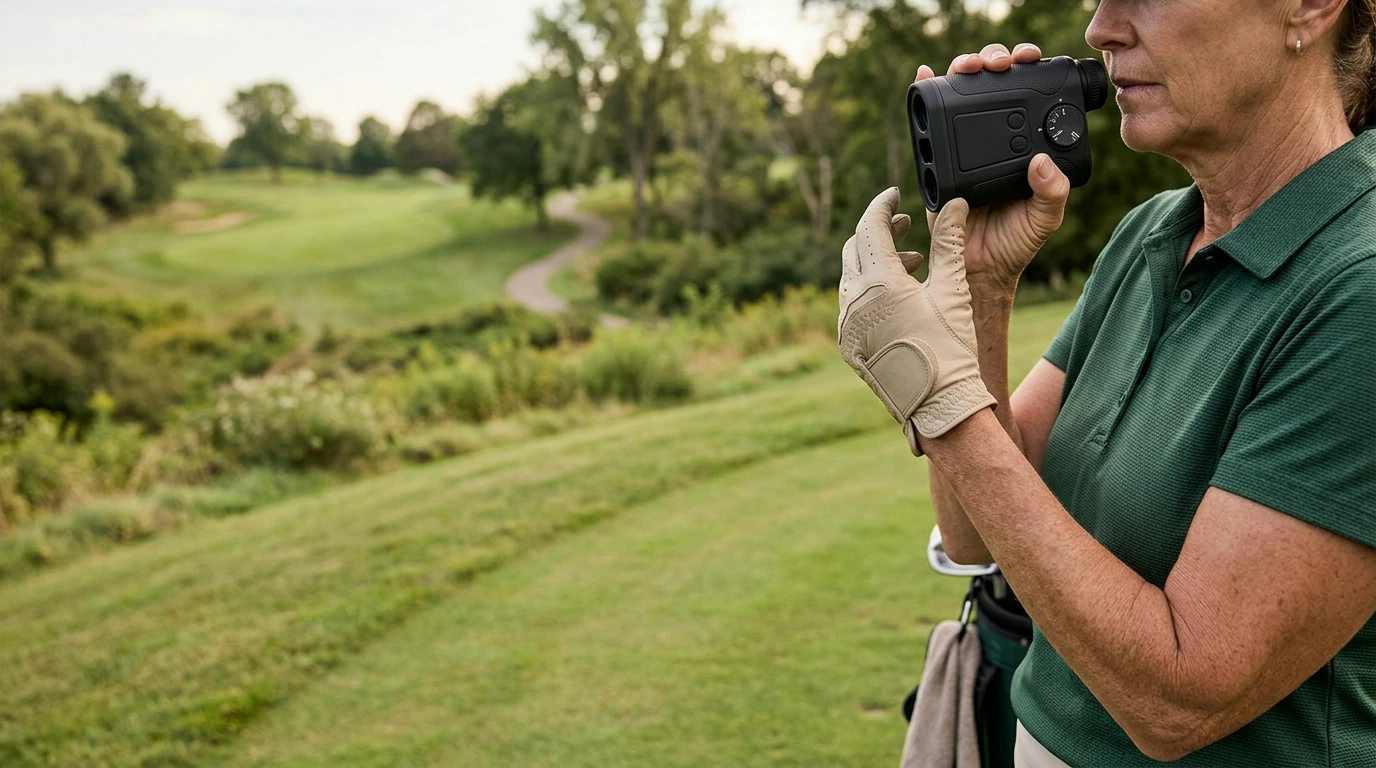
Can you use slope on a rangefinder?
Yes. You can use a rangefinder’s slope feature to estimate an adjusted distance when your target is uphill or downhill. Instead of relying only on the straight-line yardage, the device uses the angle to help you judge how far the shot may play.
In golf, slope can be useful during practice and casual rounds. For competitions, however, you must turn off any feature that measures elevation changes or provides an adjusted distance based on them. A competition’s local rules may also prohibit distance-measuring devices altogether.
How does slope help with club selection?
A shot to an elevated green generally plays longer than the measured distance, while a shot downhill generally plays shorter. A slope-enabled rangefinder may show both the measured distance and a suggested play-as distance, giving you another reference when choosing a club.
For example, if the flag is 150 yards away but sits above you, the adjusted reading may suggest a longer shot. You still need to account for wind, lie, temperature, and your own carry distances. Slope is a guide, not a guarantee of where the ball will land.
When should you turn slope off?
Turn slope off before a competitive round played under the Rules of Golf. A rangefinder can have a slope feature, but you must not use that feature during the round. Make sure the device is set to show distance only, and follow any local rule restricting rangefinders.
For practice, switching between slope and standard distance can help you learn how elevation affects your shots. In a casual round, agree with your playing partners about how you will use the feature, especially if you are keeping a competitive score.
Can slope be useful for hunting?
Yes. When a target is above or below you, angle compensation can help you assess the shot differently from a straight-line reading. Bowhunters and rifle hunters should understand how their equipment performs at different angles and distances rather than treating an adjusted reading as a substitute for practice.
Our team recommends choosing a rangefinder with controls and a display you can read in the conditions where you play or hunt. To explore a slope-enabled option, see our 800M laser rangefinder guide.
FAQ
What does flag-pole lock do on a golf rangefinder?
Flag-pole lock helps the rangefinder identify the flag as your target instead of objects farther behind it. It can make it easier to get a useful distance reading when trees or other background features are near the flag.











Leave a comment