Robot Vacuums vs Upright Vacuums: Are Pets Less Scared?
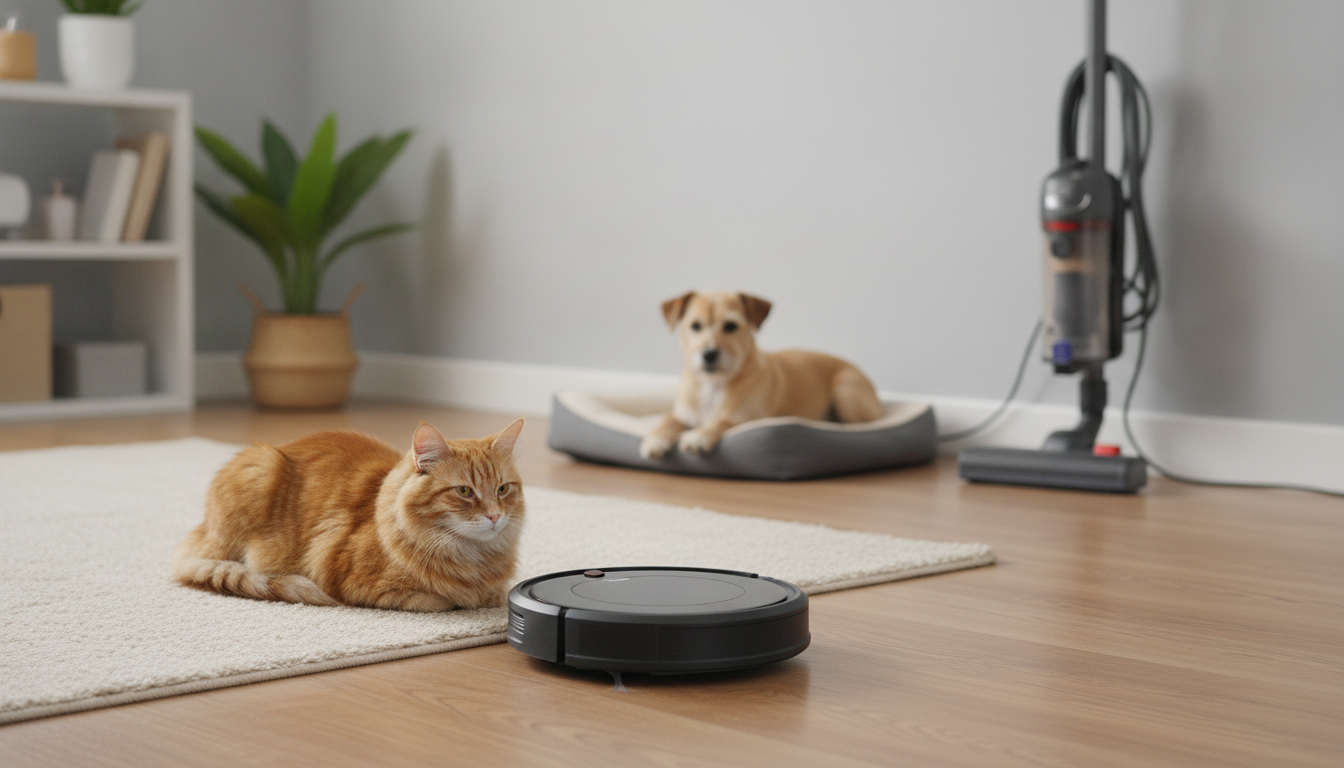
Do robot vacuums scare pets less than upright or canister vacuums?
Often, yes. Many pets react less intensely to robot vacuums than to upright or canister models because robots tend to be quieter, move more slowly, and don’t involve a person pushing a large, noisy machine directly toward them. That said, a “less scary” robot vacuum can still trigger fear in sensitive pets—especially if it bumps into them, appears suddenly, or runs in tight spaces where they can’t easily retreat.
Why robot vacuums can feel less threatening
Upright and canister vacuums usually combine high motor noise, strong airflow, and unpredictable human-driven movement. That mix can look and sound like a looming threat. Robot vacuums typically produce a steadier sound profile and follow repeatable patterns, which some pets find easier to tolerate over time. Because the robot is lower to the ground and doesn’t “charge” at the pet as directly, many cats and dogs choose to observe from a distance rather than panic.
When a robot vacuum might still scare your pet
Some pets dislike the whirring sound, the rotating brushes, or the way the robot changes direction without warning. Others are startled when it emerges from under furniture or makes contact with paws or tails. If a pet has had a bad experience with any vacuum, a robot can become the new focus of that fear—especially if it runs while the pet is eating, sleeping, or cornered in a hallway.
How to make robot vacuuming easier on pets
Start with short, supervised sessions and give your pet an easy escape route to a quiet room or elevated spot. Run the robot when your pet is already relaxed, not during high-energy times like doorbell rushes. Treats, praise, and distance help build neutral or positive associations. If your pet is very noise-sensitive, schedule runs when they’re outside or behind a closed door, then gradually reintroduce exposure.
For more detailed steps on reducing vacuum fear and building calm routines, see this guide to calm vacuum training for dogs and cats.
FAQ
How can I desensitize my pet to vacuum noise?
Pair low-intensity exposure (vacuum off, then on at a distance) with rewards, and increase closeness and duration gradually. Keep sessions short and stop before your pet panics so the experience stays manageable.
















Leave a comment