Modern Etiquette Micro-Course: Texting, RSVPs & Social Media
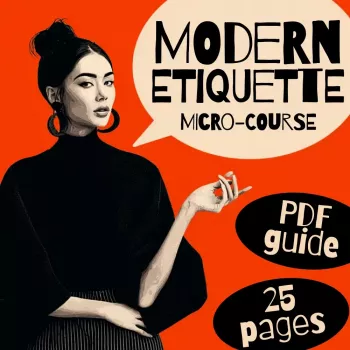
Modern Etiquette Made Easy: A Printable Micro-Course for Texting, Social Media, RSVPs, and Everyday Politeness
Modern manners aren’t about being formal—they’re about being clear, respectful, and easy to deal with in fast, digital-first moments. A short, printable etiquette micro-course can help turn awkward situations (left-on-read texts, unclear RSVPs, messy group chats, oversharing online) into calm, confident habits that save time and protect relationships at work and at home.
Why modern etiquette feels harder than it used to
Daily communication now happens at speed, in writing, and often without vocal tone—so tiny choices can get “read” as bigger messages. A delayed reply, a blunt period, an unexplained “K,” or silence in a group chat can accidentally communicate annoyance, disinterest, or disrespect.
On top of that, social norms shift by platform and generation. What feels friendly and casual on a story or in a group text can feel unprofessional in email or workplace messaging. Plans also tend to be more fluid than they used to be, which makes RSVP clarity and follow-through more important, not less.
The easiest way to reduce stress is to use a simple framework for nearly every interaction: default to clarity, consent, and consideration. When in doubt, make the next step obvious, get permission before sharing, and be mindful of other people’s time and context.
What a printable etiquette micro-course helps with
A micro-course works because it focuses on quick lessons that fit into a busy schedule—without requiring a long read or a total personality overhaul. The printable format is also useful for highlighting, jotting notes, and keeping a one-page reference near a desk, planner, or kitchen counter where routines actually happen.
Look for practical scripts you can reuse in real life: declining an invite without drama, following up without sounding pushy, correcting a misunderstanding without escalating, and setting boundaries while staying kind. When the words are already drafted, it’s easier to choose the respectful option—even when tired or stressed.
Quick etiquette fixes by situation
| Situation | Common slip | Better default | Example phrasing |
|---|---|---|---|
| Texting | One-word replies that feel dismissive | Acknowledge + answer + next step | “Yes—sounds good. What time were you thinking?” |
| Group chats | Derailing plans with side conversations | Keep logistics clear; take tangents to a new thread | “Quick admin: are we still 7pm? I’ll DM you about the other thing.” |
| Social media | Tagging or posting photos without consent | Ask before posting/tagging | “Want me to post these or keep them private?” |
| RSVPs | “Maybe” with no follow-up | Reply by the deadline; update if plans change | “Thanks for inviting me—can’t make it, but hope it’s great!” |
| Everyday politeness | Ignoring small courtesies under stress | Use micro-manners consistently | “Thanks for your patience—appreciate it.” |
Texting etiquette that prevents misunderstandings
Response timing: If a full reply isn’t possible, send a short acknowledgment plus a realistic time you’ll respond. This prevents the “Did I do something?” spiral without forcing you into a rushed answer.
Tone control: Sensitive topics deserve complete sentences and direct, kind language. If a message could be read two ways, rewrite it so it can’t. This is especially useful in work chats, co-parenting logistics, or any relationship that’s been tense.
Double-texting: A second message is fine when it adds value (clarification, a time change, a detail someone needs). What tends to land poorly is repeated nudging without new information.
Social media etiquette: consent, context, and boundaries
Consent-first posting: Ask before tagging people, posting photos that include them, or sharing screenshots—even if the content feels “harmless.” For a baseline of traditional etiquette principles adapted to modern life, the Emily Post Institute is a helpful reference.
Context matters: A joke in a private chat can land differently on a public story. Assume content will reach broader audiences over time—even if your account is private today. If you’re unsure how quickly and widely posts can travel, the Pew Research Center’s social media facts offer a grounded view of how people use platforms.
RSVP etiquette that makes hosts’ lives easier
Everyday politeness that builds trust fast
Respecting time: Be on time, keep meetings tight, and ask before calling or dropping by. If you want a structured way to communicate more clearly in real time (especially under pressure), the speaking and communication tips from Toastmasters International can complement written etiquette.
Using a micro-course to build etiquette habits in a week
Printable resources to keep the rules simple
If you want a quick, structured reset for digital manners, the Modern Etiquette Micro-Course (Printable Digital Guide) is designed for real-life situations: texting tone, social media boundaries, RSVP clarity, and everyday politeness.
For students (or anyone juggling busy schedules and lots of messages), pairing etiquette with better organization can make follow-through effortless. The Study Skills Mastery Guide (Digital Study Guide) can help with planning, checklists, and systems that reduce last-minute scrambling—one of the biggest drivers of accidental rudeness.
FAQ
How fast can etiquette habits improve with a short course?
Noticeable improvement can happen within a few days when you focus on a handful of defaults—clear RSVPs, short acknowledgment texts, and asking consent before posting. Consistency matters more than memorizing lots of rules.
Is it okay to follow up if someone doesn’t respond to a text or RSVP?
Yes—wait an appropriate amount of time based on urgency, then follow up once with context. A simple option is: “Just circling back—do you know yet if you can make it? I need to finalize plans by tomorrow.”
What’s the safest rule for social media when unsure about a post?
Choose consent and privacy first: ask before tagging, don’t share private conversations, and assume the post could be seen outside the intended audience. If you’d feel uncomfortable explaining it later, skip it or keep it private.













Leave a comment