Vacuuming With Pets: Keep Them in the Room or Move?
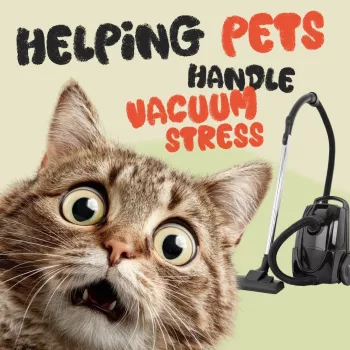
Should I vacuum when my pet is in the room or move them to another space?
Answer
In most homes, it’s best to move your pet to another space while you vacuum—especially if they’re noise-sensitive, startle easily, or have shown fear around the vacuum. A separate room (or a crate/pen they already feel safe in) reduces stress, prevents chasing or nipping at the machine, and keeps paws away from cords and moving parts.
If your pet is already calm around the vacuum, leaving them in the room can be fine as long as they have an easy “escape route” (like an open doorway or a bed they choose) and you can vacuum without cornering them. Watch body language: tucked tail, panting, pacing, or hiding means it’s time to pause and give more distance.
For pets that are nervous but you’d like them to eventually tolerate vacuuming, start with separation during cleaning and do training sessions separately. Keep training short and controlled: introduce the vacuum when it’s off, reward curiosity, then gradually add sound and movement at a distance. For a step-by-step approach to building calm, see this guide to calm vacuum training for dogs and cats.
Quick practical tip: even confident pets can benefit from being moved for deep-clean days. A closed door, a favorite chew or puzzle toy, and a bit of white noise can make vacuum time easier for everyone.
For Vacuuming With Pets: Keep Them in the Room or Move?, the best answer depends on fit, material, care instructions, and how the product will be used day to day.
Checking those details first helps avoid a poor match and keeps the choice practical after delivery.
For Vacuuming With Pets: Keep Them in the Room or Move?, the best answer depends on fit, material, care instructions, and how the product will be used day to day.
FAQ
How can I help my pet get used to the vacuum noise?
Start with the vacuum off and reward calm behavior nearby, then progress to brief, low-intensity sound exposures from a distance. Keep sessions short, end on success, and increase proximity only when your pet stays relaxed.












Leave a comment