Critical Thinking Problems: Types, Value, and Practice
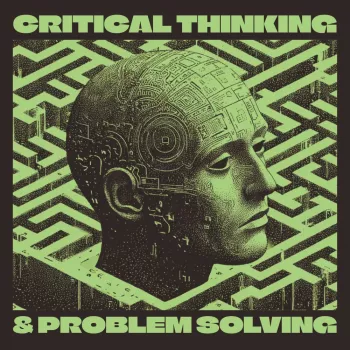
What are critical thinking problems?
Critical thinking problems are questions or situations designed to test how well someone can analyze information, spot assumptions, evaluate evidence, and reach a justified conclusion. Instead of rewarding memorization, they push for reasoning: identifying what matters, separating facts from opinions, noticing missing details, and choosing the best next step.
These problems can look like brain teasers, logic puzzles, or real-life scenarios at work and home. The defining feature is that the solution depends on the quality of the thinking process—how clearly the problem is framed, how alternatives are compared, and how confidently a decision can be defended.
Common types of critical thinking problems
Logic and deduction
These problems ask you to derive a conclusion from stated rules or clues. The challenge is to avoid leaps in logic and ensure each step follows from the information given.
Bias and assumption checks
Some problems are built to expose hidden assumptions or cognitive biases. You may need to ask, “What am I taking for granted?” or “What evidence would change my mind?”
Evidence evaluation
Here, you weigh the credibility and relevance of sources, separate correlation from causation, and decide whether the evidence actually supports a claim.
Decision-making under constraints
Many real-world problems involve trade-offs—limited time, budget, or incomplete data. Critical thinking means clarifying priorities, comparing options, and choosing the most reasonable path given the constraints.
Why they matter
Critical thinking problems build habits that transfer beyond puzzles: clearer communication, better judgment, fewer avoidable mistakes, and stronger problem-solving in everyday decisions. They also help reveal when a “quick answer” is really just a guess dressed up as certainty.
How to get better at them
Start by slowing down and restating the problem in plain language. List what you know, what you don’t know, and what would count as proof. Consider at least two alternative explanations or solutions, then test each against the facts. For practical examples and brain-teaser style practice, see this guide to critical thinking and smarter decisions.
FAQ
How can I practice critical thinking skills daily?
Use everyday choices as mini-cases: state your goal, list constraints, and write one reason for and one reason against your preferred option. Review outcomes later to spot patterns in assumptions or overlooked evidence.















Leave a comment