Disadvantages of Silicone Bakeware: What to Know
What are the disadvantages of silicone bakeware?
Silicone bakeware is flexible, lightweight, and easy to store, but those same qualities can make it less convenient for some recipes. Its main drawbacks are less browning, a tendency to wobble when filled, and the possibility of retaining grease or odors. If you prefer crisp edges or a sturdy pan you can lift with one hand, metal may be a better choice.
Does silicone bakeware brown food as well as metal?
Silicone does not conduct heat as efficiently as metal, so cakes, muffins, and breads may develop paler sides and bottoms. That can be helpful when you want a tender exterior, but it is less appealing for recipes where a browned crust matters. Baking times can also differ from those for a metal pan, so use the recipe’s doneness cues rather than relying on the clock alone.
Why can silicone pans be difficult to handle?
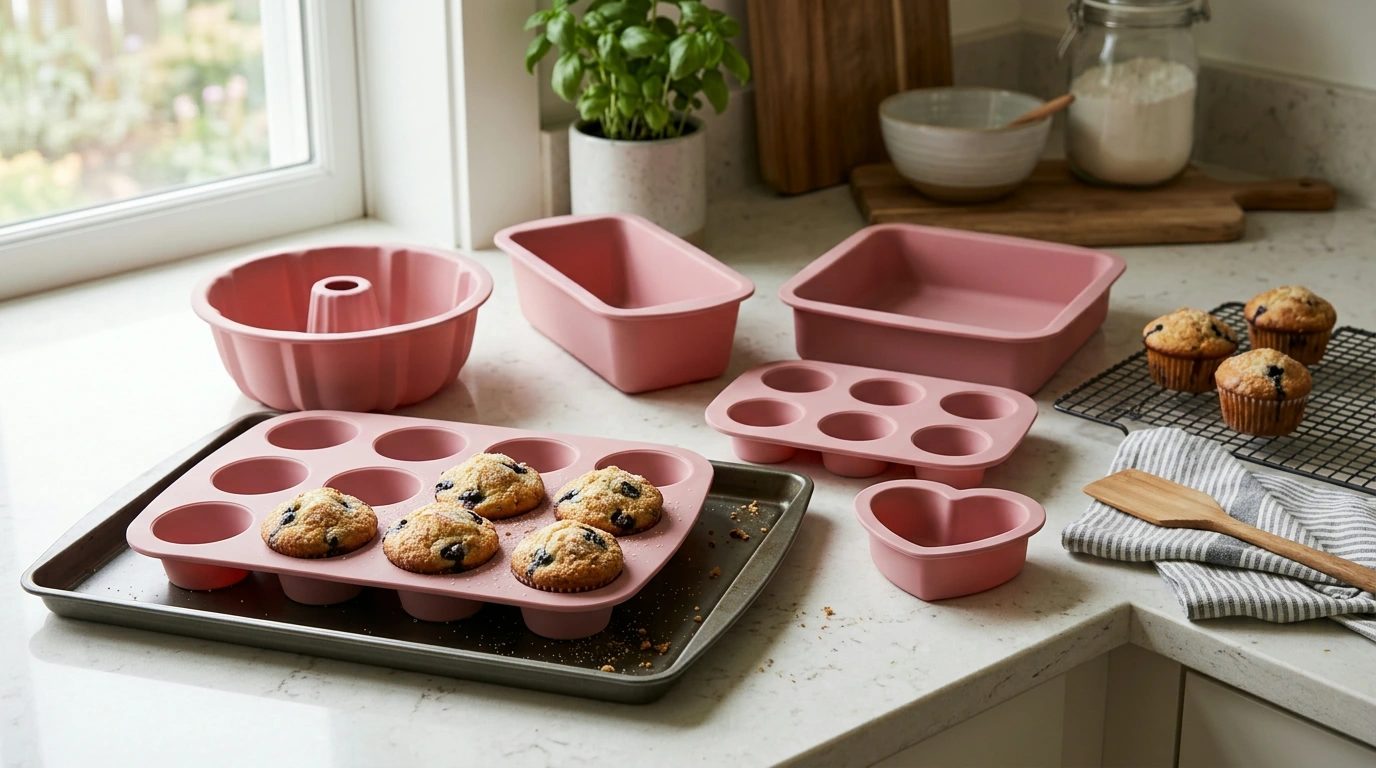
A flexible mold can bend when you pour in batter or move it into the oven. Place it on a rigid baking sheet before filling it; the sheet gives you a stable surface for transferring it in and out of the oven. Let baked goods cool as directed before removing them, since pulling on a hot, floppy mold can damage a delicate cake.
Is silicone bakeware hard to clean?
Silicone is often easy to wash, but oily residue can cling to its surface and leave a tacky feel. Strong food odors may also linger. Wash it thoroughly with warm, soapy water, rinse well, and let it dry before storing. Follow the manufacturer’s cleaning instructions if you plan to use a dishwasher.
Are there limits to where you can use it?
Silicone bakeware has a manufacturer-specified temperature limit and should not touch an open flame or heating element. It is not a substitute for a pan designed for stovetop cooking or broiling. Avoid knives and sharp utensils in the mold, as cuts can damage the surface.
When should you choose silicone?
Our team recommends considering silicone when easy release and compact storage matter more than deep browning. It can work well for muffins, small cakes, and other tender bakes. For an overview of a coordinated option, see our guide to the pink nonstick silicone bakeware set.
FAQ
Do you need to grease silicone bakeware?
Some silicone molds release food without greasing, but a light coating can help with delicate or sticky recipes. Follow the recipe and the manufacturer’s care instructions for your pan.
















Leave a comment