Homework Help Made Easy: Simple Routines for Independence
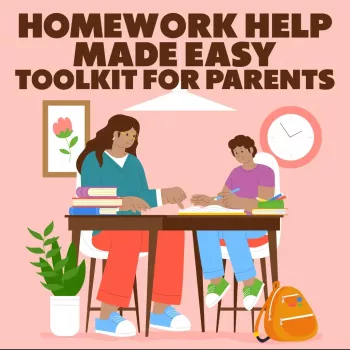
Homework Help Made Easy: A Parent Toolkit for Strong Study Habits and Independent Learning
Homework can become calmer and more consistent when expectations are clear, routines are predictable, and kids have simple tools they can use without constant reminders. A strong at-home system doesn’t require hovering—it relies on a repeatable process that helps kids start, stay focused, and finish with confidence. Below is a practical parent toolkit for routines, organization, motivation, and strategies that build independence over time.
What “help” looks like when the goal is independence
Effective homework help looks more like coaching than co-working. Instead of doing tasks together, use guiding questions (“What’s the instruction asking?” “What’s the first step?”) and let your child complete the work. Define success in a way that’s easy to measure: finished work, checked for completeness, packed for school, and done with minimal conflict.
A simple, consistent process keeps everyone on the same page: start-up routine → focused work blocks → quick review → pack-up routine. Parents provide structure (time, space, tools), while kids own decisions (task order, self-checking, when to ask for help). That separation reduces power struggles and strengthens follow-through.
Set up a homework-ready environment in 10 minutes
Choose one primary spot for homework—kitchen table or a desk—and keep supplies within reach to cut down on stalling. Build a small supply kit: pencils, eraser, highlighter, scratch paper, sticky notes, and a calculator if needed. For older kids working on a device, aim for a single-tab rule when possible and silence notifications. A visible timer (not a parent’s running commentary) prevents arguments about how much time is left.
Quick environment checklist
| Area | What to set up | Why it helps |
|---|---|---|
| Workspace | Clear surface + comfortable chair + good light | Reduces friction and improves focus |
| Supplies | Basic stationery + paper + charger | Prevents repeated trips away from work |
| Distractions | Phone out of reach + TV off + notifications muted | Protects attention during work blocks |
| Time tools | Timer + simple schedule on paper | Makes expectations concrete and predictable |
Create a routine that actually sticks
Pick a consistent start time tied to an existing habit—after a snack, after a short decompression break, or after dinner. Consistency matters more than the “perfect” time. Use a short start-up script that becomes automatic: review assignments, estimate time, choose the order, gather materials, start the timer.
Keep work blocks age-appropriate. Many younger kids do best with 10–15 minutes of work followed by a short break; older students can build toward 25–40 minutes with short breaks. End each session with a three-minute wrap-up: check for completeness, place work in the backpack or folder, and reset supplies for tomorrow. That final step prevents the common “I did it but forgot to turn it in” problem.
A simple homework plan kids can follow
A plan reduces overwhelm by making work visible and doable. Start by listing tasks exactly as assigned, including study tasks and long-term projects. Mark priorities: due tomorrow, needs materials, or requires extra help. Estimate time for each item so your child can see an end point and plan breaks.
Then choose the order. Some kids need a quick win first; others do better tackling the most urgent assignment while energy is highest. For multi-step tasks, track progress by checking off steps (brainstorm, outline, draft) rather than waiting for one big “done.”
Homework plan template (example)
| Task | Time estimate | First step | Done |
|---|---|---|---|
| Math practice (10 problems) | 20 min | Do problems 1–3 | □ |
| Reading log | 15 min | Read 5 pages | □ |
| Science notes review | 10 min | Highlight key terms | □ |
| Pack for tomorrow | 3 min | Put completed work in folder | □ |
Homework strategies that reduce battles and build skills
Motivation without nagging: boundaries and encouragement
For kids who avoid homework or melt down
Printable tools that keep the system consistent
A ready-to-print option for parents who want a complete system
If you want a done-for-you set of routines and printables, the Homework Help Made Easy Toolkit for Parents – Printable Guide for Creating Study Habits, Homework Strategies & Independent Learning provides structured supports you can use daily (start → focus → check → pack). It works best when introduced gradually: start with one checklist and one routine, then add planners or reflection sheets once the routine feels normal.
For older students who need stronger study habits beyond nightly homework, the Study Skills Mastery Guide adds practical methods for focus, memory, and self-checking—helpful when the challenge is less about compliance and more about effective studying.
When to loop in the teacher (and what to ask)
For more research-backed guidance, see the American Psychological Association’s overview on homework and children and Harvard Graduate School of Education tips for helping kids with homework. If learning differences or attention issues are part of the picture, Understood offers practical strategies families can try.
FAQ
How long should homework take each night?
A common guideline is about 10 minutes per grade level (for example, 20 minutes in 2nd grade, 60 minutes in 6th). If your child regularly goes far beyond that despite a solid routine, it’s worth contacting the teacher to clarify expectations and workload.
What can a parent do when a child refuses to start homework?
Use a short transition (snack or a brief decompression break), then set a clear boundary with limited choices (which assignment first, where to sit, which timer). A “2-minute start” plus a written checklist can lower arguing and get momentum going.
How can kids learn to check their own work without a parent correcting everything?
Teach a quick self-check routine: re-read directions, compare work to an example or rubric, verify required parts are included, then do one targeted scan (math steps, spelling, or completeness). Keep the check short so it becomes a habit rather than a second homework session.















Leave a comment