Indoor Cat Entertainment: Play, Puzzles & Routines
How do I keep my cat entertained indoors?
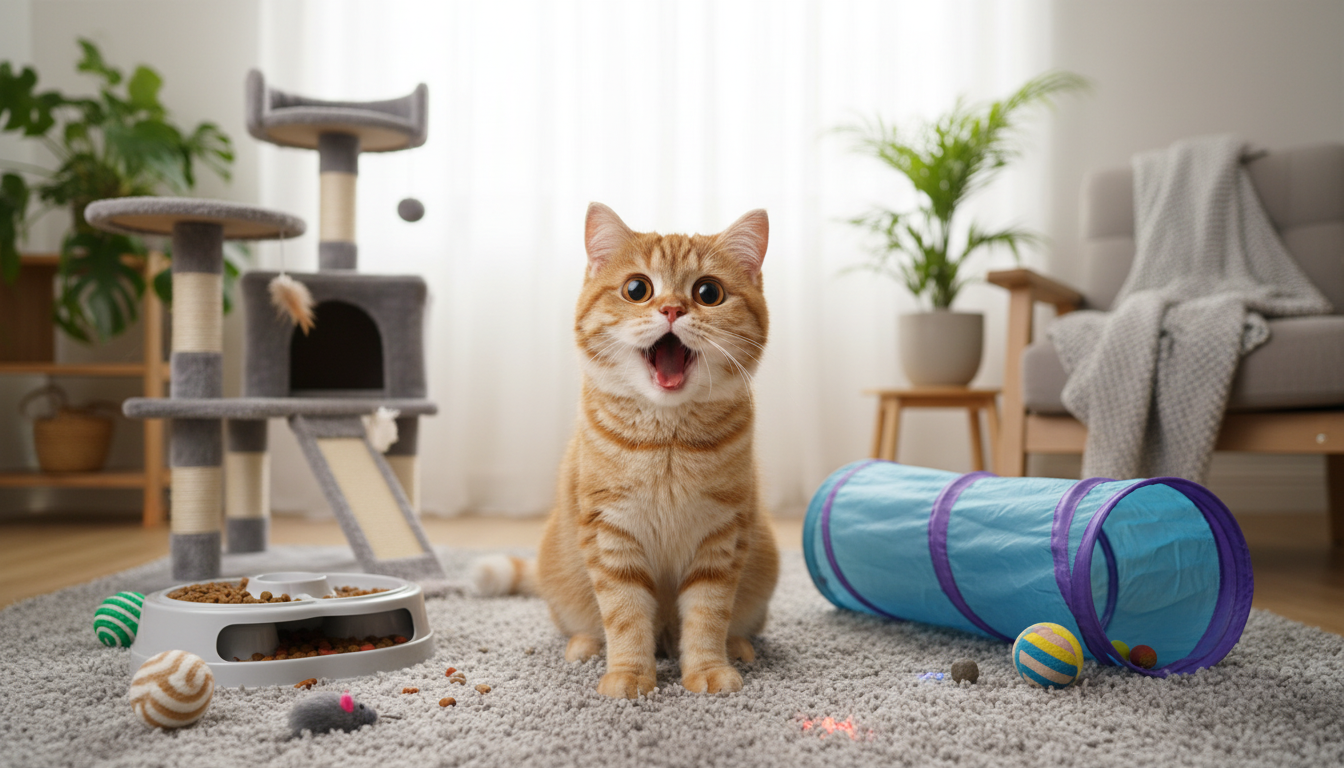
Indoor cats thrive when their day includes movement, hunting-style play, cozy rest spots, and a little novelty. The goal is to rotate activities so your cat doesn’t get bored with the same toy or routine. With a few simple changes, you can keep your cat mentally engaged and physically active—without turning your home upside down.
Answer
Start with short, high-energy play sessions that mimic the hunt. Use a wand toy or teaser and move it like prey: hide it behind furniture, let it “escape,” then allow a successful catch. Two to three sessions a day for 5–10 minutes each often works better than one long session.
Add daily “work for food” enrichment. Puzzle feeders, treat balls, or hiding small portions of kibble in different rooms encourages sniffing and problem-solving. If your cat eats wet food, try a lick mat to slow them down and provide a calming activity.
Upgrade the environment for climbing and watching. Cats love vertical space, so a sturdy cat tree, window perch, or wall shelves can create an indoor “territory” to explore. Place a perch near a window for bird-watching, and rotate what they see by moving it between windows when possible.
Rotate toys instead of leaving everything out. Keep a small bin of toys and swap them every few days. Include a variety: kickers for wrestling, crinkle toys for sound, lightweight balls for chasing, and a cardboard box or paper bag (handles removed) for exploring.
Finally, build predictable mini-routines. Many cats stay happier when play, meals, and quiet time happen in a consistent rhythm—especially in multi-person households.
For more ideas you can implement quickly, see the full guide: https://prestigal.com/guide-indoor-cat-enrichment-diy-toys-play-routines-home-upgrades/.
FAQ
What are signs my indoor cat is bored?
Common signs include excessive meowing, knocking items over, overgrooming, waking you at night, or pouncing on hands and feet. Increased scratching outside the scratching post and restlessness can also signal they need more enrichment.











Leave a comment