Vacuum Stress in Pets: Signs to Watch & When to Stop
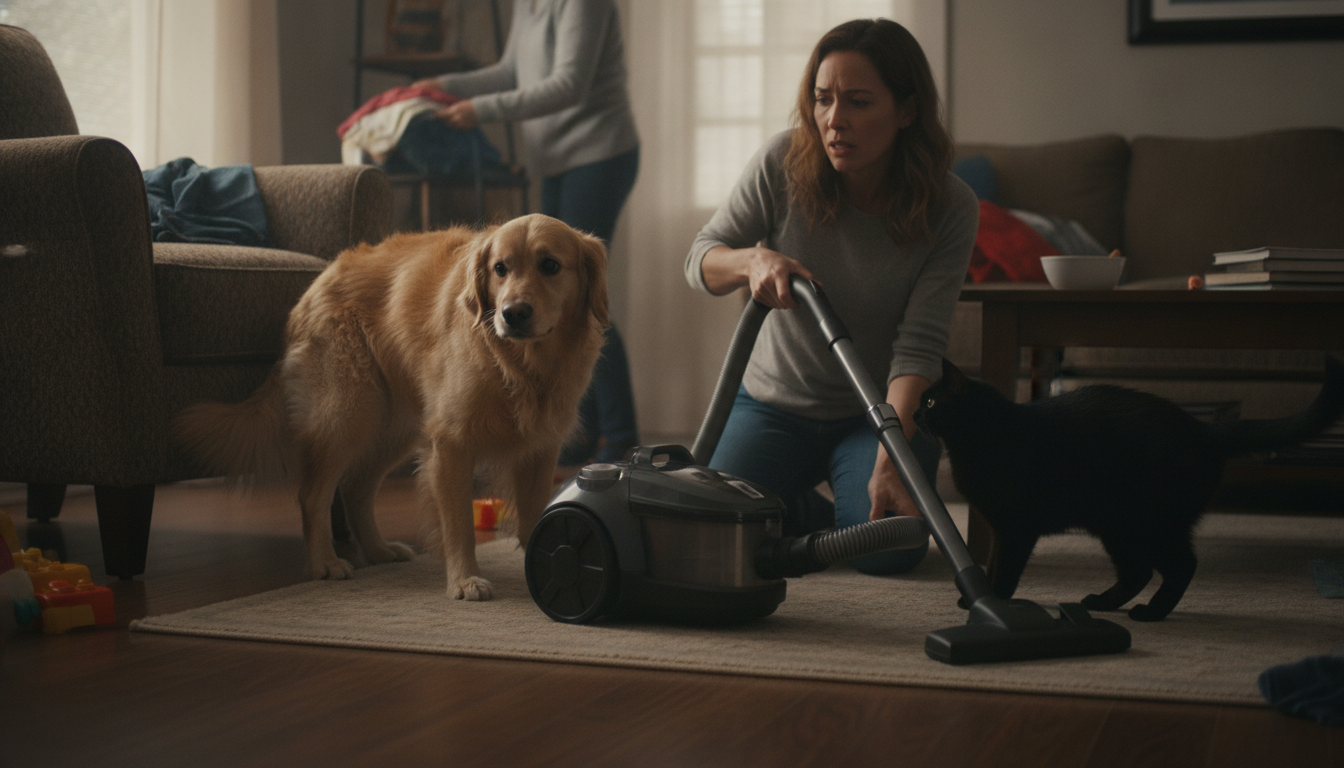
What are the signs my pet is stressed by the vacuum, and when should I stop?
Many pets dislike the vacuum because it’s loud, unpredictable, and moves straight toward them. Some animals show mild discomfort, while others experience full-blown fear. Knowing the difference helps you avoid pushing past your pet’s limit and accidentally making the problem worse.
Answer
Common signs your pet is stressed by the vacuum include:
- Body language changes: tail tucked, ears pinned back, crouching low, stiff posture, wide eyes, whale eye (showing the whites), or a “frozen” look.
- Avoidance: bolting to another room, hiding behind furniture, refusing to enter a space where the vacuum is stored, or trying to escape the house/room.
- Vocalizing: barking, whining, yowling, growling, or sudden silence if your pet is usually social.
- Stress behaviors: panting when it’s not hot, drooling, trembling, lip licking, yawning, pacing, or shedding more than usual.
- Escalation signals: snapping at the air, lunging toward the vacuum, cornering themselves, or redirecting their frustration toward people or other pets.
When should you stop? Stop the session if you see any escalation signals (growling, lunging, snapping), if your pet can’t take treats or respond to simple cues, or if they’re desperately trying to flee or hide. Those are clear indicators the vacuum is over their threshold, and continuing risks strengthening the fear response.
A good rule: if your pet can still eat, move normally, and choose to stay in the area without panic, you’re likely at a manageable level. If not, pause, create distance (turn the vacuum off and move it away), and resume only when your pet is calm again.
For step-by-step ways to reduce fear safely—especially using gradual exposure and positive reinforcement—see the full guide: calm vacuum training for dogs and cats.
FAQ
How can I help my pet feel safer during vacuuming right now?
Give them a quiet “safe zone” away from the noise (a closed room with a fan or white noise helps), and start vacuuming only after they’ve settled. If they’re highly reactive, separate them before you turn the vacuum on rather than trying to manage it mid-panic.















Leave a comment